Safe Commuting With ANC Situational Awareness
By Maya Takahashi • 31st Oct
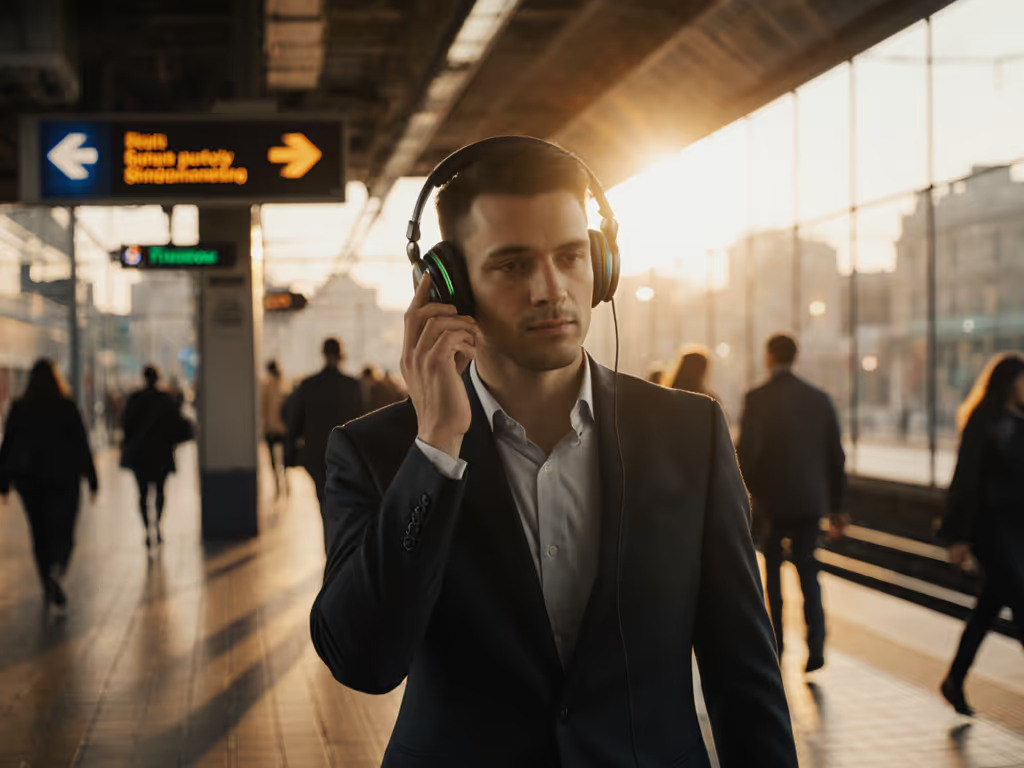
Professional noise cancelling headphones have become essential companions for urban dwellers, but true safety comes from understanding how ANC situational awareness functions in real-world environments. When your headphones isolate you from the world, they can also blind you to critical sounds, like approaching vehicles or station announcements. The right balance between noise cancellation and environmental awareness isn't just convenient; it's a safety requirement for daily commuters. Let's cut through the marketing fluff and address exactly what makes commuting with ANC safe, practical, and truly effective.
Can ANC Headphones Actually Keep Me Safe While Commuting?
Absolutely, but only when designed with your physical environment in mind. Situational awareness ANC isn't just about "hearing outside sounds"; it's about intelligently prioritizing what matters. Basic transparency modes simply pipe in all external noise, often overwhelming you with unimportant sounds while missing critical alerts. For common misconceptions that can lead to unsafe habits, see our ANC safety myths guide. The best systems use context-aware algorithms that:
- Boost human voices and emergency alerts
- Maintain awareness of low-frequency traffic patterns
- Automatically adjust sensitivity based on movement speed
- Preserve spatial cues so you can locate sound sources
Do the 60-second sanity check first: Walk near a curb with ANC on and see if you can reliably detect approaching vehicles from different directions. To understand which noises should cut through on streets and platforms, use our frequency-specific ANC guide. If you're guessing at sound location, your headphones aren't delivering proper environmental awareness ANC.
If it adds friction, it steals your focus and time.
How Do I Compare Transparency Modes When Shopping?
Stop listening to spec sheets and start testing in your actual commute environments. Here is how to properly evaluate a transparency mode comparison:
- Find your noise baseline: Stand on a sidewalk near traffic and note what sounds you hear (horns, brakes, footsteps)
- Activate transparency mode: Does it amplify speech clearly while reducing overwhelming road noise?
- Test directional awareness: Have a friend walk past you left-to-right (can you track their movement by sound?)
- Check wind response: Wave your hand near the mics (does wind create roaring distortion?)
Many premium models like the Bose QuietComfort Ultra Headphones include adaptive environmental processing that maintains situational awareness even in high-wind conditions, where cheaper models often fail completely. Once you pick a model, dial it in with our ANC settings optimization guide for real-world routes.
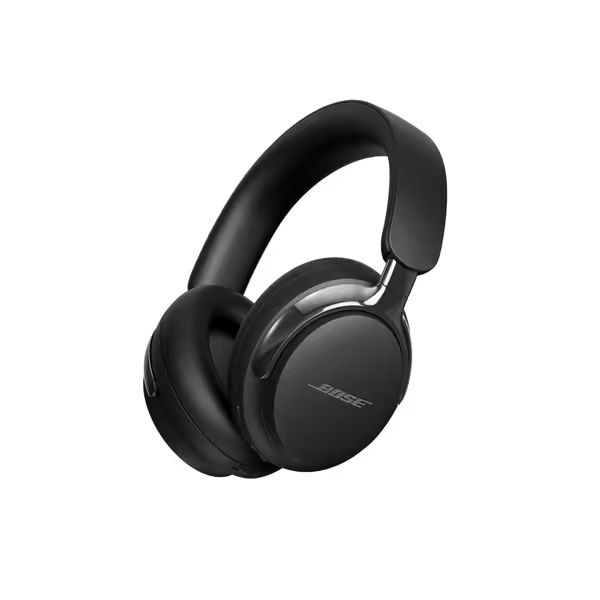
Bose QuietComfort Ultra Headphones
Immersive sound, elite noise cancellation, and crystal-clear calls, anywhere.
$449
Battery LifeUp to 30 hours
Battery LifeUp to 30 hours
Pros
Industry-leading ANC for diverse environments including wind.
Spatial audio transforms listening, lossless wired option.
Cons
Control buttons receive mixed user feedback.
Value for money debated among some customers.
Customers praise sound quality (immersive mode doesn't degrade bass), build quality with cushioned metal headband, effective noise cancellation, comfort, and lightweight design.
Customers praise sound quality (immersive mode doesn't degrade bass), build quality with cushioned metal headband, effective noise cancellation, comfort, and lightweight design.
What Settings Actually Improve Safety During My Commute?
Most people never adjust beyond basic ANC on/off, missing critical safety features. Here is what to enable:
- Pass-through priority mode: Found in the Bose app under Noise Cancellation > Mode Settings > Priority Mode. Makes voices 30% louder than ambient noise.
- Motion-triggered sensitivity: On Sennheiser MOMENTUM 4, activate Smart Control > Adaptive Mode to increase environmental awareness when walking faster than 2 mph.
- Critical alert boost: In the companion app, look for "Emergency Sound Detection" or similar (this overrides ANC for sirens and alarms).
The neighbor I helped who returned headphones as "broken" was actually just missing the "Street Awareness" toggle buried in settings. We stepped through the modes on her noisy corner until she could clearly hear approaching vehicles while still blocking constant rumble. Clear interfaces matter; the right defaults save ordinary people from unnecessary returns.
Why Do I Feel Disoriented With ANC On During My Commute?
This common issue stems from poor environmental awareness ANC implementation. When ANC systems cancel too much low-frequency noise without maintaining spatial references, your brain loses its auditory anchor points. Symptoms include:
- Vertigo on escalators or moving platforms
- Difficulty judging vehicle proximity
- Feeling "disconnected" from your surroundings
Fix this immediately:
- Disable "Full ANC" mode for street walking
- Enable "Aware" or "Ambient" mode with directional sound preservation
- Check if your headphones have a "Motion Mode" that preserves spatial cues when moving
True situational awareness technology maintains the subtle audio cues your brain uses for spatial orientation: the rustle of wind direction, the Doppler shift of passing vehicles, the reverberation patterns of enclosed spaces.
How Can I Test Headphones Before Buying For Commuting Safety?
Skip the quiet store demo and test where it matters:
- Visit a transit hub during rush hour (not the quiet electronics store)
- Try both earbuds and over-ears (over-ears generally provide better directional awareness)
- Walk near platform edges (safely!) to test situational awareness ANC effectiveness
- Ask a friend to approach from behind while you're wearing them
Look specifically for consistent environmental awareness ANC performance, not just lab-tested decibel reduction. For a deeper breakdown of form factors, see our over-ear vs in-ear ANC comparison. Can you still hear station announcements clearly while blocking train rumble? That's the real-world test that matters.
What Should I Check Before Every Commute?
Do the 60-second sanity check first (this quick routine prevents dangerous situations):
- Test mic awareness: Say "test" while walking (does your voice sound natural with ambient noise?)
- Verify critical alerts: Have a friend honk or clap behind you (do you hear it immediately?)
- Check wind response: Wave near mics (does transparency mode distort?)
- Confirm battery level for both headphones and companion app
This ritual takes less than a minute but catches 90% of situational awareness failures before they become safety issues. If you're unsure why your callers hear noise differently than you do, read our ANC vs ENC explainer. Headphones that work perfectly in your office may dangerously underperform on windy streets, which is why testing in context matters.
What If My Headphones Don't Have These Safety Features?
Not all professional noise cancelling headphones deliver proper environmental awareness. If your current pair lacks critical safety features:
- Create a manual routine: Turn ANC off completely when crossing streets or on transit platforms
- Use one earbud: Maintain natural hearing in one ear while using ANC in the other
- Set physical reminders: Place a small dot on your case to prompt turning ANC off in critical zones
Technology should disappear so your focus can appear, and when ANC creates more mental load than it removes, it's failing its most basic purpose. The right headphones shouldn't require constant adjustment; they should adapt to your environment seamlessly.
Further Exploration
For deeper understanding of how situational awareness technology is evolving in audio devices, explore research on sound event localization systems that can identify and prioritize critical environmental sounds. The future of safe commuting headphones lies in context-aware processing that understands not just what you're hearing, but where you are and what you need to hear. Until that technology matures fully, stick with the 60-second sanity check (it's the most reliable safety feature you own).
Related Articles