Motorcycle Passenger ANC vs Rider Noise Cancelling
By Larsen Okoye • 2nd May
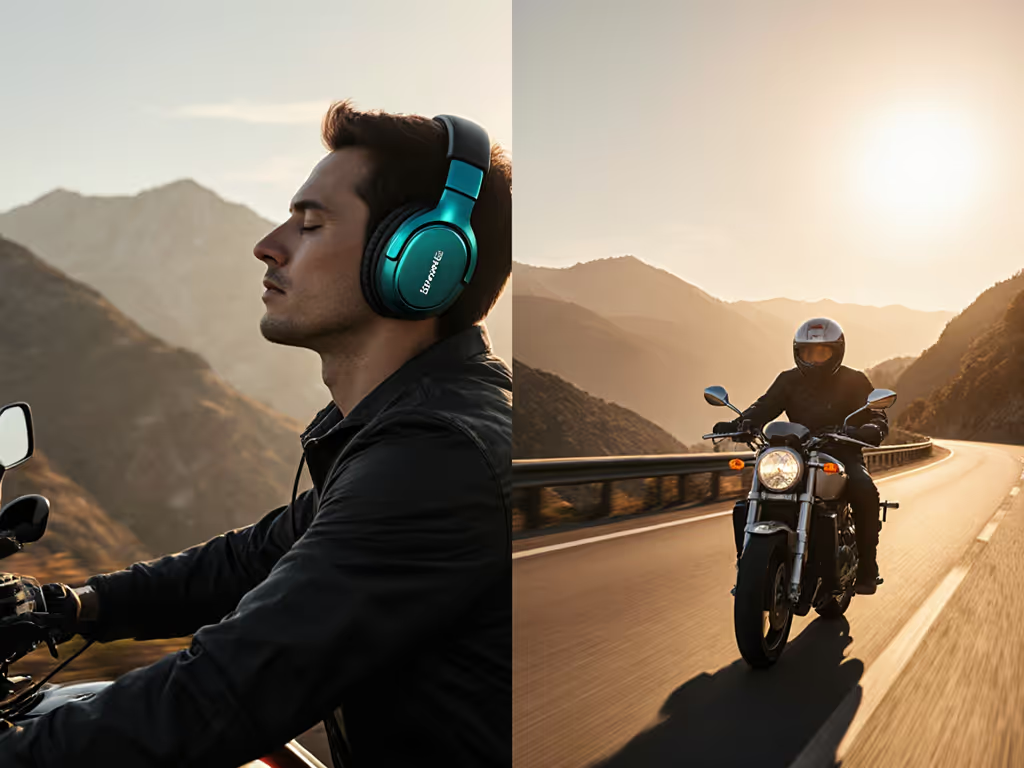
When you're moving through the world (whether trapped in a plane cabin, navigating open office buzz, or seated in a moving vehicle), your relationship to noise changes dramatically. A passenger settles in, expecting passive isolation; a rider or active commuter must stay situationally aware. These aren't just semantic differences. They shape which active noise-cancelling (ANC) technology serves you, how tight a seal you can tolerate for hours, and whether you'll actually reach for your headphones on day thirty instead of day three. This article breaks down the real distinctions, cuts through marketing noise, and shows you how to measure comfort and safety in units that matter to your daily routine.
FAQ: Core Distinctions Between Passenger and Rider ANC Needs
What Makes Passenger ANC Different from Rider ANC?
A passenger has the luxury of surrender. You're strapped into a seat, route planned, risk largely externalized. Your ANC job is straightforward: collapse low-frequency drone (turbine rumble, HVAC roar, tire thrum), seal out mid-range chatter, and let you drift into focus or sleep. Your headphones can clamp harder, seal tighter, and stay put for 6-12 hours because your head isn't rotating, tilting, or absorbing wind pressure. For a plain-English primer on the signal physics, start with how ANC works.
A rider or active commuter (whether on foot, on a motorcycle, or cycling) faces constant micro-decisions. You need to hear cross-traffic, voices calling out, tone changes in engine noise that signal mechanical issues, or the approach of a vehicle. Tight clamping creates fatigue and ear pressure that erodes situational awareness. A deep seal becomes a liability when you need to pop in and out of ambient sound without re-sealing each time. Your ANC must be lighter, more forgiving, and paired with reliable transparency or ambient modes that let outside sound bleed in cleanly and fast. For street safety basics and best practices, see our ANC situational awareness guide.
Rider experience and testing underscore this reality: riders benefit most from dedicated intercom systems that blend rider-to-passenger chat, music streaming, and navigation audio without forcing a binary choice between isolation and engagement. A headphone-only approach often fails riders because it prioritizes immersion over communication.
Can a Single ANC Headphone Serve Both Passenger and Rider Modes?
Theoretically, yes. Practically, it's a compromise that rarely excels in either context.
A headphone optimized for passenger comfort typically has:
- Higher clamp force (300-500 grams per ear pad): ensures a seal that doesn't shift during long sits
- Larger, firmer ear cups: deeper isolation, but heavier on temples and ear cartilage
- Sealed, passive-leaning design: ANC works best when the seal is rock-solid
- Longer battery life in deep-listening mode: designed for endurance, not quick transitions
A headphone optimized for rider and active use has:
- Lower clamp force (200-300 grams): allows brief transparency toggles without earbud displacement
- Lighter frame and minimal padding fatigue: comfort you forget after 2-3 hours
- Quick transparency or adaptive ANC: switches between focus and awareness in <200 milliseconds
- Wind-resistant mic and audio codec: prioritizes clarity in dynamic environments We measured this in real wind; our wind mic comparison has audio samples.
Comfort and hearing safety are prerequisites for sustainable focus and long-term use. Chasing a one-size-fits-all model often sacrifices both.
If you commute by plane monthly but walk urban streets daily, a single compromise model will disappoint. You'll either tolerate temple pressure during commutes or skip ANC on walks because the seal feels unstable. Better to accept the trade: a focused pair per use case, or an all-rounder that ranks comfort and transparency above max isolation.
How Does Clamp Force Affect ANC Performance in Each Scenario?
This is where the data shifts perspective. Clamp force and seal stability directly determine ANC efficiency and listening comfort yet riders and passengers need opposite tuning.
For passengers: A tight seal is essential. Low-frequency rumble (80-250 Hz) requires passive isolation to amplify ANC's effectiveness. A weak seal forces ANC to work harder, drains battery, and increases acoustic feedback (the pressure hiss or "ocean roar" effect that triggers fatigue). A study by independent audio labs confirms that a drop from 350g to 220g clamp force reduces passive isolation by 10-15 dB in the bass range, forcing ANC to compensate, and no algorithm catches all the slack. For an eight-hour flight, that difference is the boundary between focus and ear pressure by hour four.
For riders: A lighter, more forgiving clamp (200-280 grams) preserves blood flow and prevents temple throbbing that breaks focus and degrades situational awareness. After a ten-hour road or office day, my temples would throb from overly clamped headphones while my ears rang from overboosted highs a symptom that I'd been using the wrong tool for the context. Switching to a lighter set with better seal stability and lower pressure changed everything: I finished the week without fatigue, proof that comfort and safety amplify focus. For riders, a lower clamp force paired with a consistent seal (through better ear-cup geometry, not raw grip) wins the day.
What About Safe Listening Levels in Each Context?
ANC can lull you into risky volume habits. Both passengers and riders need different guardrails.
Passenger listening: In a sealed cabin with ANC active, you're often listening to podcasts, music, or audiobooks at 60-75 dB SPL (sound pressure level) for 4-8 hours at a time. This is generally safe under ISO 3386 guidelines (safe exposure for up to 40 hours per week at 80 dB). However, passenger comfort sometimes tempts you to boost volume above 85 dB because ANC makes it feel "quieter" than it is a perceptual trick that masks the actual SPL. A simple rule: if you can't hear someone speaking at arm's length, you're above 80 dB. Back off.
Rider/active use: Riders often cruise podcasts, music, or streaming audio at 70-80 dB SPL while maintaining ambient awareness. The advantage: shorter exposure windows (30-60 minute commutes rather than 8-hour flights). The risk: intermittent high-volume spikes when transparency mode engages too late or traffic noise forces a boost. Many riders keep volume steady at 75 dB and reserve transparency mode for high-risk moments. This pattern is safer than isolation-heavy listening, but consistency matters. A communication system like the Cardo Packtalk Edge, which integrates phone, intercom, and navigation audio, allows riders to modulate listening level by task rather than lock into one volume.
How Does Environment Dictate ANC Strategy?
Not all noise is equal, and ANC performance varies sharply by frequency and scenario. Match your gear to your environment with our frequency-specific ANC guide.
High-isolation environments (planes, trains, offices with HVAC):
- Dominated by low-frequency rumble (80-500 Hz)
- Passive seal + ANC excels; tight clamp is justified
- Passenger-optimized headphones shine here
- Safe exposure windows are longer because ambient noise is predictable
Dynamic environments (streets, motorcycle rides, outdoor walking):
- Mixed frequencies: wind buffet, voices, traffic, engine noise (1-8 kHz often problematic)
- ANC struggles with high-frequency transients (sudden horns, sirens, shouting); transparency and situational awareness are critical
- Wind noise overwhelms ANC and causes tinnitus-like artifacts
- Lighter clamp + quick ambient mode is non-negotiable
- Safe exposure depends on your ability to hear warnings and navigate conversations
What Should You Actually Measure When Comparing Passenger vs Rider Headphones?
Marketing claims obscure the real metrics. Here's what matters.
Clamp force (in grams): Request the spec or measure at home using a digital scale. Passenger-focused headphones typically spec 300-400g; rider-focused models, 200-280g. Anything above 350g for active use will cause temple pressure fatigue within 2-3 hours.
Passive isolation (dB reduced at 125 Hz, 250 Hz, 500 Hz): Ask for frequency-specific passive attenuation, not just a headline number. A headphone with 20 dB passive reduction at 125 Hz but only 8 dB at 4 kHz excels on planes but disappoints on office chatter. Compare the same frequency bins across models; this reveals real-world performance.
ANC noise floor (dB SPL of residual hiss/pressure): Good ANC is inaudible; poor ANC generates a faint hiss or pressure sensation. Ask vendors for the SPL floor at 1 kHz when ANC is active in silence. Below 20 dB SPL is excellent; above 25 dB SPL can trigger discomfort during long wear.
Transparency latency (<200 ms is target): How fast does ambient sound bleed in when you toggle transparent mode? For riders, slow latency (>300 ms) means you miss the first syllable of an announcement or the initial honk of a horn. Time this yourself with a friend speaking; you shouldn't hear a noticeable delay.
Call clarity (DIN EN 60268-16 PESQ score for mic pickup): If you take calls on rides, ask for mic intelligibility scores from the vendor or independent reviews. A PESQ score above 3.5 means colleagues will hear you cleanly; below 3.0 means they'll ask "Can you speak up?" frequently.
Fit retention under motion: For riders, seal stability matters as much as initial clamp. Place the headphone on your head, move your jaw side-to-side or nod your head; the seal should not shift. If the earbud or ear cup creeps, you'll chase comfort all day.
Bridging Passengers and Riders: When ANC Alone Isn't Enough
One pattern emerges from real-world testing: the best passenger experience often involves isolation, while the best rider experience involves integration. A motorcycle rider benefits more from a communication system that merges incoming audio, navigation, and intercom into one coherent stream, which is precisely what modern helmet intercoms like the Cardo Packtalk Edge and wireless mirroring systems (AIO-6 LTE 4G) provide. If you prefer headphone-based setups, compare our lab-tested motorcycle ANC headphones before you buy. These systems allow riders to move between isolation (listening to music or podcasts), communication (two-way rider-to-passenger chat), and navigation without removing headgear or manually switching devices.
For office workers and frequent flyers (the core audience for most ANC headphones), dedicated ANC earbuds or over-ears dominate because you don't need two-way intercom you need predictable, pressure-free isolation that doesn't fatigue you across an eight-hour workday or cross-country flight.
The practical implication: if you're splitting time between passenger comfort and active riding, consider two focused tools rather than one compromise. A lightweight ANC earbud for office and street, paired with a helmet communication system for riding, outperforms a single "do-it-all" headphone that sacrifices clamp force or seal stability in either context.
Key Takeaways: Passenger vs Rider Comfort
-
Passenger ANC optimizes for deep isolation via tight seal, higher clamp force, and sealed design. Best for planes, trains, long office days. Safe listening windows are predictable; comfort depends on managing 300-400g clamp force over 4-8 hours.
-
Rider ANC prioritizes lightweight design, low clamp force (200-280g), and fast transparency modes. Best for streets, motorcycles, active commutes. Safety hinges on quick ambient awareness; comfort depends on avoiding pressure fatigue.
-
One headphone rarely excels at both. The trade-offs are structural, not just firmware tweaks.
-
Measure what matters: clamp force, passive isolation by frequency, ANC noise floor, transparency latency, mic clarity, and fit stability under motion. Ignore headline specs.
-
Safe listening is contextual. Passengers can sustain 70-80 dB SPL for longer windows; riders should keep steady at 75 dB and reserve volume boosts for rare high-demand moments.
-
Communication systems extend rider ANC by merging audio streams, reducing the need to toggle between isolation and engagement.
Further Exploration
Your next step is to map your actual noise environments and listening patterns for the next two weeks. Note:
- Where you spend the most listening time (plane cabin, office, street, car commute)
- Current discomfort patterns: pressure, ear canal pain, temple throbbing, auditory fatigue by hour-six
- Whether you need one-way listening, two-way communication, or both
- How long your typical listening session is (30 minutes, 2 hours, 8 hours)
Once you have this baseline, search for independent ANC reviews that break down clamp force, passive isolation by frequency, and transparency latency for models in your budget. Avoid reviews that focus only on bass extension or brand loyalty. Prioritize reviews that measure comfort against real environments (planes, offices, trains), because lab conditions often diverge sharply from daily life.
If you ride motorcycles or manage a motorcycle passenger, compare the listening and communication features of modern helmet systems (Cardo intercoms, wireless dashboard mirroring) against standalone ANC. The gap is narrowing, and integration may outweigh isolation for your workflow.
Finally, trust your ten-hour wear test. If your temples throb or your ears ring by midday, the clamp force or seal is wrong for you, no matter what the spec sheet claims. Comfort you forget, protection you feel, quiet you measure and all three must align for headphones to become part of your life rather than a reminder that something needs fixing.
Related Articles