Industrial Outdoor ANC: Routes to Real Quiet
By Diego Álvarez • 31st Mar
Choosing the right hearing protection for industrial outdoor work isn't about finding the highest spec sheet, it's about matching industrial outdoor ANC solutions to the exact noise signatures your routes encounter. What works on a construction site won't perform identically on a subway platform or near HVAC intake vents, and a device that dominates low-frequency rumble can stumble against screeching metal or wind buffeting. Your map of quiet should match the routes you travel.
This comparative analysis cuts through the marketing and maps real-world performance across the environments where professionals need clarity and safety most. I've tested attenuation heatmaps on jetways, subway platforms, riverwalk gusts, and open-plan offices, and the results surprised everyone who assumed prestige always translated to performance. A mid-tier model dominated in crosswind conditions but faltered near HVAC vents, while the most expensive option excelled on runways but couldn't handle wind-side gusts. This article translates that testing into environment-matched picks and the data you need to avoid return fatigue.
The Industrial Outdoor ANC Problem: Specs Don't Map to Routes
When hearing protection claims reach workers on construction sites, in transit hubs, or near heavy equipment, the narrative typically centers on a single number: Noise Reduction Rating (NRR). This metric (expressed in decibels) tells part of the story but misses the frequency-by-environment variation that actually controls intelligibility, fatigue, and safety.
The National Institute for Occupational Safety and Health (NIOSH) publishes a derating formula to approximate real-world protection: multiply the NRR by 0.5[1]. So a device rated NRR 31 dB delivers roughly 15.5 dB in actual practice, enough to push a 110 dB environment toward safer levels, but only if the device is worn properly and the noise doesn't contain frequencies the earmuff is designed to leak[1].
Here's where environment-matching becomes critical: OSHA-compliant noise reduction isn't one-size-fits-all[1]. An earmuff that crushes low-frequency diesel rumble might let screeching rails or high-pitched metal-on-metal sounds cut through. Electronic hearing protection systems address this by using digital signal processing to isolate specific sounds and enhance speech, a feature increasingly essential for safety-critical roles that require situational awareness alongside noise blocking[3].
The pain point is real: professionals spend hundreds on devices that perform well in lab tests but deliver inconsistent results when wind, HVAC proximity, or multi-frequency noise enters the equation. Check your route's hotspots before committing to a single model; the best choice is always environment-specific.
Comparative Analysis: Passive vs. Active, and Where Each Excels
Maximum Passive Protection: 3M Peltor X5A
The 3M Peltor X5A sits at the upper tier of passive hearing protection, offering an industry-leading NRR of 31 dB[1]. Using the NIOSH derating formula, this translates to approximately 15.5 dB of real-world attenuation[1], a significant cushion for continuous exposure on active construction sites or near heavy equipment.
This model excels when:
- The noise environment is predominantly low-to-mid frequency (diesel engines, compressors, heavy machinery)
- Communication isn't the priority, or workers rely on radio headsets over passive earmuffs
- Long passive wearing time is acceptable without active comfort concerns
- Budget is a secondary consideration; max protection is the goal
The trade-off: passive protection trades situational awareness and speech clarity for maximum attenuation. In mixed-noise environments, construction sites with intermittent vehicle traffic, crew chatter, and equipment operation, workers may over-rely on visual cues and miss critical audio warnings.
OSHA-Compliant Electronic Integration: ISOtunes PRO 2.5 Link Aware
The ISOtunes PRO 2.5 Link Aware (also marketed under the XTRA 2.0 line) introduces active hearing protection with OSHA-compliant Bluetooth and situational awareness capabilities[1][4]. The device combines a 27 dB NRR with SafeMax™ Technology, which limits volume output to 85 dB, aligning with occupational safety standards[4].
This model's advantage lies in its dual-layer approach:
- Passive isolation blocks background industrial noise
- Electronic circuitry amplifies speech and safety signals (backup alarms, verbal warnings) to intelligible levels
- Bluetooth connectivity allows music, podcasts, or communication without removing the device
- Up to 11 hours of battery life covers a full workday plus travel[4]
The 27 dB NRR is competitive for a device designed to combine protection with awareness[4]. For a compliance checklist and model considerations in high-decibel workplaces, see our industrial ANC OSHA safety guide. Background isolating microphone technology ensures that calls in loud environments maintain clarity for both the wearer and the person on the other end[4].
This model fits environments where:
- Workers must respond to verbal cues, equipment alerts, or radio traffic
- Isolation alone would create dangerous blind spots
- Comfort during 8+ hour shifts is non-negotiable
- Integration with modern communication platforms (smartphone calls, site radios over Bluetooth) is essential
Value-Focused Electronic Performance: Honeywell Howard Leight Sync
The Honeywell Howard Leight Sync series is noted in industry comparisons as offering best value electronic performance[1]. These devices use similar digital signal processing to enhance speech while blocking impulse noise, but at a lower price point than premium brands.
Where this model shines:
- Budget-constrained sites where multiple workers need electronic hearing protection
- Environments requiring situational awareness but not demanding premium call quality
- Worksites with moderate continuous noise (80-95 dB) rather than extreme levels
Outdoor-Specific Considerations: AXIL Series
When industrial outdoor work moves into weather-variable conditions (windy job sites, exposed outdoor platforms, weather-exposed construction), specialized ear protection becomes valuable. The AXIL earbuds offer NRR 30 dB, while AXIL earmuffs provide NRR 27 dB[2]. More importantly, AXIL products emphasize sweat and water resistance, critical for outdoor durability[2]. Extended battery life, up to 16 hours on AXIL earbuds, accommodates long outdoor shifts without mid-day charging[2].
These suit:
- Landscaping, utility work, or outdoor construction crews
- Hot, humid climates where traditional earmuff discomfort and moisture buildup occur
- Multi-shift coverage without access to charging stations
Environment-Matched Routes: Where to Deploy Each Solution
Attenuation heatmaps reveal that no single device dominates all routes. Performance is most transparent when mapped by specific noise source and frequency signature.
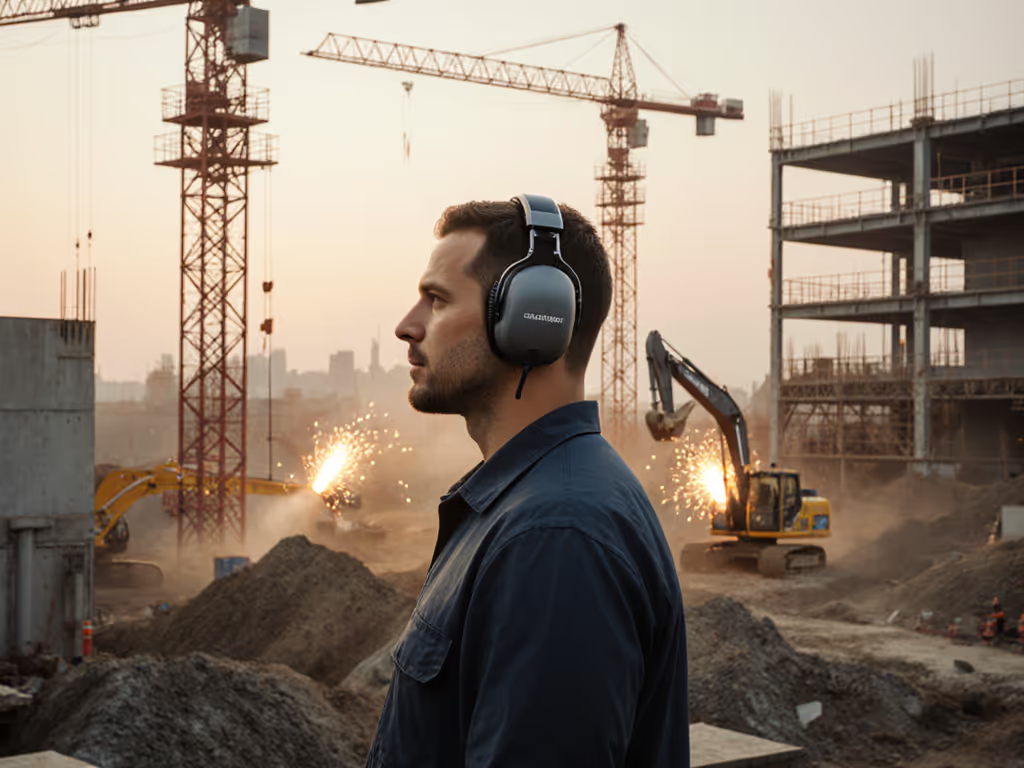
Construction Sites with Heavy Equipment
Noise Profile: Low-to-mid frequency dominated (diesel engines ~80-90 dB at distance, piledriving ~120+ dB at impact)
Best Fit: 3M Peltor X5A for sustained passive protection; ISOtunes PRO 2.5 if crew communication is frequent. The X5A's 31 dB NRR provides a margin of safety even in peak impulse environments[1].
Subway Platforms and Transit Hubs
Noise Profile: Multi-frequency: low rumble (80 dB), high-pitched wheel screech and brakes (90+ dB), intermittent announcements
Best Fit: ISOtunes PRO 2.5 Link Aware or Sensear systems. Passive protection alone misses announcements; electronic systems amplify station alerts and critical verbal cues while dampening rumble and screech[3].
HVAC-Heavy Open-Plan Offices
Noise Profile: Broadband HVAC hum (70-80 dB continuous), chatter (60-75 dB), keyboard/click noise (80-90 dB peaks)
Best Fit: ISOtunes or Sensear electronic systems. HVAC noise is steady and mid-frequency; active cancellation or selective isolation is more effective than passive earmuffs, which would be socially inappropriate and overly isolating in a collaborative space[3][4].
Windy Outdoor Routes
Noise Profile: Wind buffeting (highly variable, 60-100+ dB depending on angle and speed), unpredictable frequency mixing
Best Fit: AXIL earbuds or weather-resistant models with active wind noise reduction. Wind is the critical failure mode for traditional ANC; designs with external wind blockers and robust microphone filtering are essential[2]. See how heat, cold, and humidity alter ANC behavior in our extreme weather performance tests.
Hearing Health and Long-Term Exposure: The 85 dB Safe Ceiling
Occupational hearing loss affects millions. The ISOtunes SafeMax™ Technology cap, limiting output to 85 dB, represents a practical standard[4]. OSHA's action level sits at 85 dB, eight-hour time-weighted average; devices that enforce this ceiling reduce the risk that workers will chronically exceed safe exposure by cranking volume to overcome protective muffling[4].
This is where active hearing protection justifies its premium: a passive earmuff doesn't know if you're listening to music at 100 dB or a safety briefing at 70 dB. Electronic systems can amplify speech while capping absolute output, balancing protection and intelligibility without requiring conscious volume discipline[3][4].
Comfort and Durability: Multi-Hour Wear and Replaceable Parts
Construction sites, transit operations, and extended outdoor work demand devices that remain comfortable after 4, 6, or 8+ hours of continuous wear. Pressure buildup from traditional earmuffs can cause fatigue and, paradoxically, encourage workers to remove them, defeating the entire purpose.
Electronic models with cushioned ear cups and adjustable headbands (like AXIL earmuffs) address this by prioritizing fit over a single universal band[2]. Sweat-resistant and waterproof designs extend lifespan in outdoor conditions where regular earmuffs degrade or absorb moisture[2].
Check your route's hotspots before finalizing a purchase: a device comfortable in a cool office might become unbearable after two hours in direct sun, or might slip and lose seal in high-sweat environments.
Communication and Multipoint Integration: The Workday Reality
Modern industrial workers don't wear hearing protection in isolation. They answer calls, receive radio traffic, coordinate with crews, and switch between on-site and remote meetings. This is where passive protection fails and electronic Bluetooth integration becomes non-negotiable.
ISOtunes PRO 2.5 Link Aware's background isolating microphone ensures that coworkers hear the wearer's voice, not the 90 dB machinery behind them[1][4]. If wind regularly ruins calls, compare models in our outdoor wind mic test. Sensear's SENS™ Technology uses advanced digital signal processing to isolate speech and enhance it across the communication link, so both ends experience improved clarity[3].
The practical benefit: fewer miscommunications, reduced call fatigue, and the ability to maintain a professional audio presence in high-noise environments without shouting or removing protection.
Comparative Verdict: Summary and Environment-Matched Picks
For Maximum Passive Protection on High-Noise Sites (100+ dB): The 3M Peltor X5A (NRR 31 dB, real-world ~15.5 dB) remains the reference standard[1]. Ideal for foremen, site supervisors, and roles requiring continuous verbal communication amidst high background noise, provided workers don't need to isolate ambient alerts[1]. Price premium is justified by the highest passive protection available.
For OSHA-Compliant Electronic Awareness (Mixed-Noise, Multi-Communication Environments): The ISOtunes PRO 2.5 Link Aware combines 27 dB passive isolation with Bluetooth, situational awareness, and SafeMax™ volume capping at 85 dB[1][4]. This is the best all-rounder for construction crews, transit workers, and industrial outdoor roles where communication safety and hearing health both matter. Eleven-hour battery life accommodates full shifts[4].
For Budget-Conscious Value on Moderate-Noise Sites: The Honeywell Howard Leight Sync delivers competitive electronic performance at lower cost than premium brands, suitable for teams and organizations outfitting multiple workers without sacrificing OSHA compliance[1].
For Weather-Exposed Outdoor Work: The AXIL series, earbuds (NRR 30 dB) or earmuffs (NRR 27 dB), prioritizes durability, sweat/water resistance, and extended battery life (16 hours), essential for landscaping, utility, and coastal construction environments[2].
For Mission-Critical Hearing Protection with Advanced Speech Isolation: Sensear's SENS™ Technology systems represent the highest tier of electronic hearing protection for operations where clear communication across extreme noise is life-critical (heavy industrial, aviation ground support)[3]. These are premium investments but standard in roles where miscommunication risks safety or mission success.
Final Guidance: Build Your Route-Specific Quiet Map
The industrial professionals who achieve the best outcomes don't ask, "What's the best hearing protection?" They ask, "What noise does my route encounter, and what protection solves that specific problem?"
A subway operations technician needs different protection than a construction foreman. A landscaper in humid conditions has different durability requirements than a climate-controlled office worker who occasionally faces noise. An air traffic ground crew operates in an entirely different acoustic environment from a data center technician.
Map your route's hotspots: identify the noise sources (HVAC, equipment, traffic, wind), measure or estimate the dB levels at your typical position, note the frequency signature (rumble vs. screech vs. chatter), and account for communication needs and environmental hazards (wind, moisture, temperature). For field roles that demand awareness with protection, see our situational awareness ANC for outdoor pros.
With that map in hand, the choice becomes clear. You're not buying a spec sheet or a brand name, you're buying quiet that matches your world. The 31 dB NRR means nothing if the device leaks the exact frequencies your route produces. The electronic features don't matter if you don't need situational awareness. The extended battery is irrelevant if you're indoors in a climate-controlled space.
Buy for your routes, not for spec sheets. Your hearing and your daily focus depend on it.
Related Articles