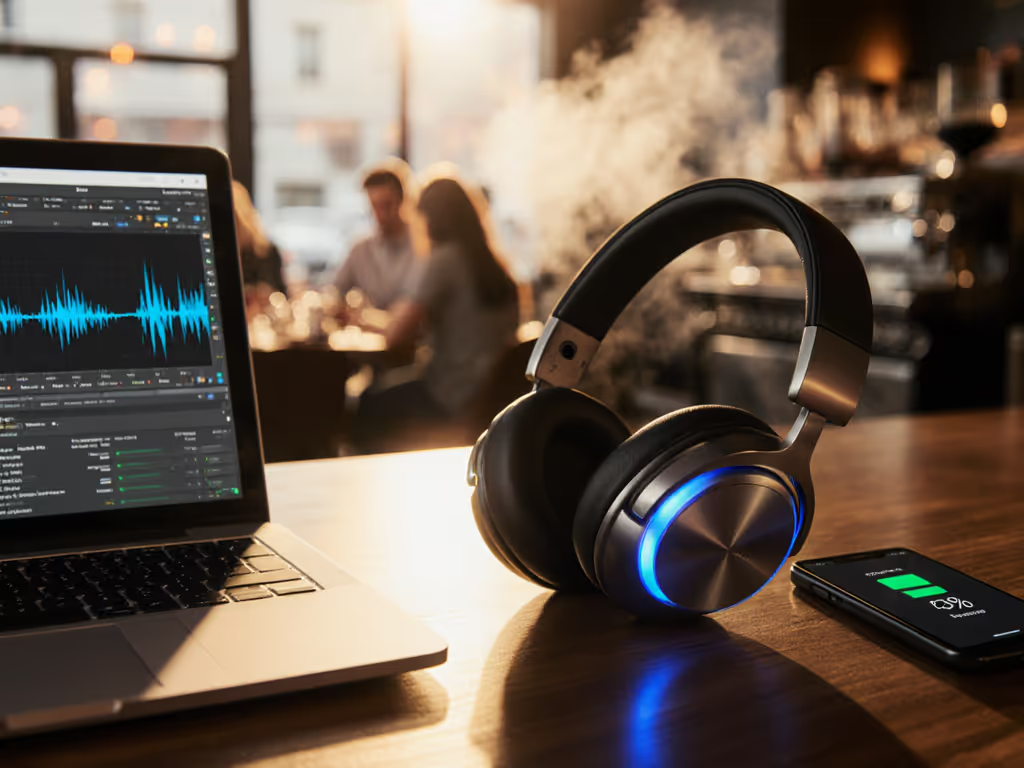
ANC in Extreme Weather: Heat and Cold Performance Compared
By Maya Takahashi • 23rd Oct
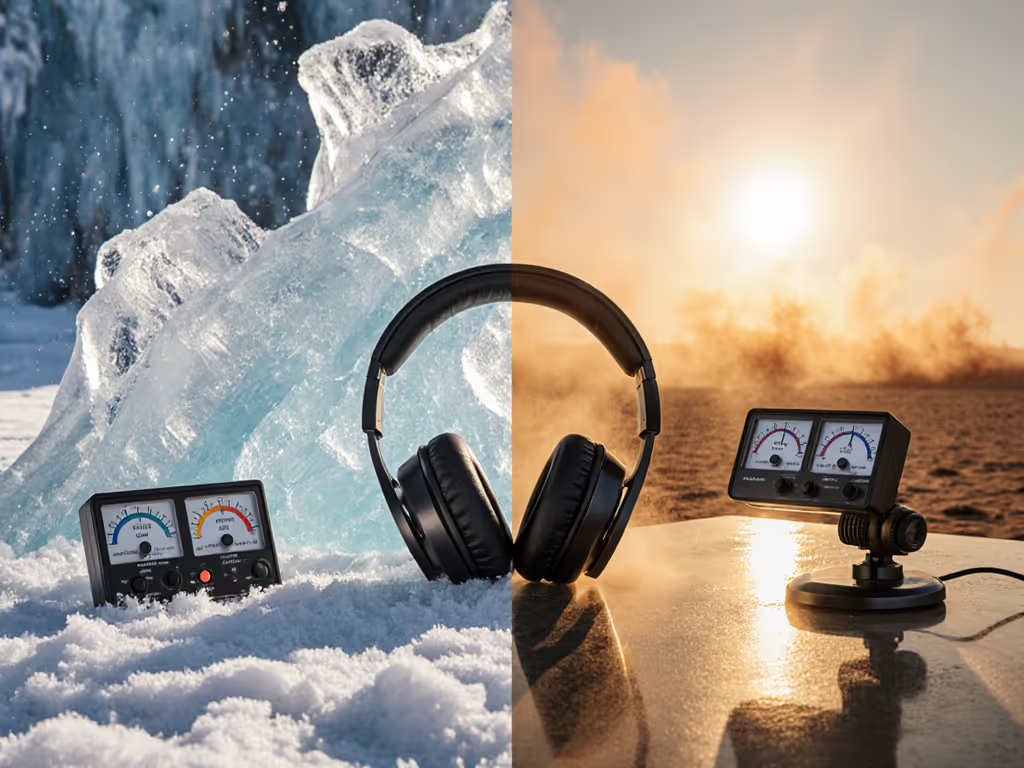
Ever wonder why your noise cancelling headphones seem less effective on a sweltering summer day or during a freezing winter commute? Understanding the weather impact on ANC and ANC performance in extreme conditions is crucial for anyone who relies on these devices in real-world environments. As someone who regularly tests headphones on windy sidewalks and crowded subways, I've seen how temperature and humidity can dramatically alter your listening experience, not because the technology fails, but because physical conditions change how sound waves behave.
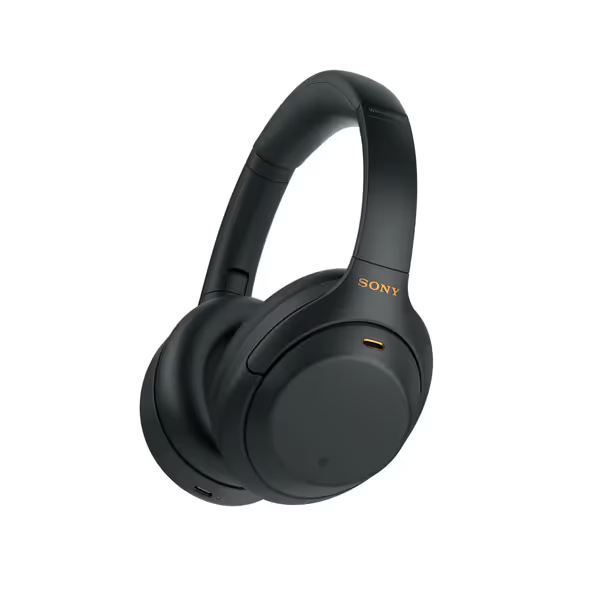
Sony WH-1000XM4 Noise Cancelling Headphones
Premium noise cancellation for reliable, quiet focus in any environment.
$188
Battery LifeUp to 30 hours
Battery LifeUp to 30 hours
Pros
Exceptional ANC for diverse loud environments.
Superior call clarity with precise voice pickup.
Cons
Inconsistent reports on long-term battery charging reliability.
Perceived value for money varies among users.
Customers praise these headphones for their excellent sound quality, noise cancellation, and comfort, particularly noting they work well in loud places.
Customers praise these headphones for their excellent sound quality, noise cancellation, and comfort, particularly noting they work well in loud places.
FAQs: Weather, ANC, and Real-World Performance
Why does my noise cancellation feel weaker in extreme heat?
When temperatures rise, air molecules spread out, changing how sound waves travel. If you want a refresher on how ANC works, we break down destructive interference in plain language. This affects ANC's ability to perfectly "cancel" noise through destructive interference (remember: two identical sound waves 180 degrees out of phase cancel each other).
What actually happens:
- Heat reduces air density, so sound travels differently, and ANC algorithms can miscalibrate
- Sweat buildup creates micro-gaps in the ear seal, so noise leaks in (especially problematic for earbuds)
- Electronics work harder, battery drains faster, and ANC processing power can drop
Fix it in 3 steps:
- Cool your headphones for 2 minutes in a shaded spot before use
- Check your seal - reapply ear tips if sweaty (Jabra's Elite 7 Active grip coating helps here)
- Disable ANC briefly during peak activity, then re-engage when settled
Remember that neighbor who returned two headphones as "broken" until we found the buried "Disable ANC on Calls" toggle? That's why surface-level settings matter more than spec sheet numbers.
How does humidity affect noise cancelling performance?
High humidity thickens the air, making low-frequency sounds travel farther and louder, exactly the frequencies ANC targets best. This creates a paradox: ANC should work better in humid conditions, but real-world results vary.
Your humidity cheat sheet:
| Condition | ANC Effectiveness | Why | Pro Tip |
|---|---|---|---|
| Low humidity (<30%) | Slightly reduced | Dry air scatters sound waves | Use Transparency mode to hear announcements |
| Moderate humidity (40-60%) | Optimal | Ideal sound wave propagation | Maintain normal ANC settings |
| High humidity (>70%) | Mixed | Enhanced bass frequencies but moisture disrupts mic sensitivity | Wipe earcups before use; avoid direct rain |
Key insight: Most noise cancelling in heat struggles come from humidity's effect on microphone ports, not the ANC algorithm itself. Water-resistant models like the Sony WH-1000XM4 handle this better with sealed mic chambers.
Do cold temperatures improve ANC performance?
Counterintuitively, yes, within limits. Cold air is denser, helping sound waves travel more predictably. But below 32°F (0°C), problems emerge:
- Battery drain accelerates: lithium-ion batteries lose 20-30% capacity in freezing temps
- Plastic components stiffen: ear seals lose pliability, creating noise leaks
- Condensation forms when moving between temperature zones (e.g., heated office to cold street)
Pro move for cold weather headphones: Keep them in an inner pocket until needed. The Sennheiser MOMENTUM 4's fold-flat design makes this easy, and its 60-hour battery life provides buffer against cold-induced drain. For expectations with ANC on versus off in real conditions, see our ANC battery life tests.
If it adds friction, it steals your focus and time. This is why I always test headphones through full temperature transitions, not just lab conditions.
Why does wind completely break ANC outdoors?
Wind creates chaotic, high-frequency noise that ANC struggles to predict. To keep your voice clear during gusts, learn the difference between ANC vs ENC and when each matters. Unlike steady airplane hum (perfect for ANC), wind buffeting produces irregular sound waves that overwhelm the "anti-noise" generation process.
What happens technically:
- Microphones capture wind turbulence, and the signal gets distorted
- The ANC processor tries to create inverse waves for random noise, and fails
- Result: "wind roar": a loud whooshing sound created by the headphones themselves
Actual solution (not marketing fluff):
- Enable wind noise reduction in your app (Sony calls it "Atmospheric Pressure Optimizer")
- Angle your head away from wind direction (a side profile blocks more noise than front-facing)
- For calls: Switch to beamforming mic mode (found in Settings > Microphone > Outdoor Mode on most apps)
How do I maintain ANC performance across temperature swings?
The key isn't fighting weather, it's anticipating it. Here's my street-tested protocol:
Before extreme weather exposure:
- Update firmware (cold temps exacerbate software bugs)
- Clean mic ports with a dry brush (moisture + dust = clogged sensors)
- Pre-condition headphones: bring them to ambient temperature for 15 minutes
During use:
- Switch modes proactively: High heat: lower ANC strength; Freezing: max ANC to compensate for seal loss
- Carry spare ear tips (foam compresses in heat, silicone hardens in cold)
- Watch for condensation: wipe surfaces before storing
Product-specific shortcuts:
- Sony WH-1000XM4: Say "Hey Google, set Adaptive Sound Control to Outdoor"
- Sennheiser MOMENTUM 4: Triple-tap right earcup to activate Transparency+ mode
These aren't just settings, they are environmental adaptations that transform frustration into flow. Technology should disappear so your focus can appear. For a deeper walkthrough of fit and mode tweaks by environment, see our ANC optimization playbook.
Which ANC performs better: Over-ears or earbuds in extreme weather?
It depends on the specific weather challenge, not blanket superiority:
Heat/humidity wins:
- Over-ears (Sony WH-1000XM4): Better air circulation around ears, no direct ear canal sweat exposure
- Earbuds (Jabra Elite 7 Active): IP57 rating handles sweat better, but heat buildup inside the ear canal causes discomfort
Cold wins:
- Over-ears (Sennheiser MOMENTUM 4): Ear warmth preserves seal integrity, battery lasts longer
- Earbuds: Less surface area to warm up, but ear tips stiffen faster in cold
Critical factor: Closed-back over-ears trap heat (problematic above 85°F/30°C), while open-ear designs fail in wind. There's no universal "best," only what works for your specific weather exposure. If you're still deciding on form factor, compare strengths in our over-ear vs in-ear ANC guide.
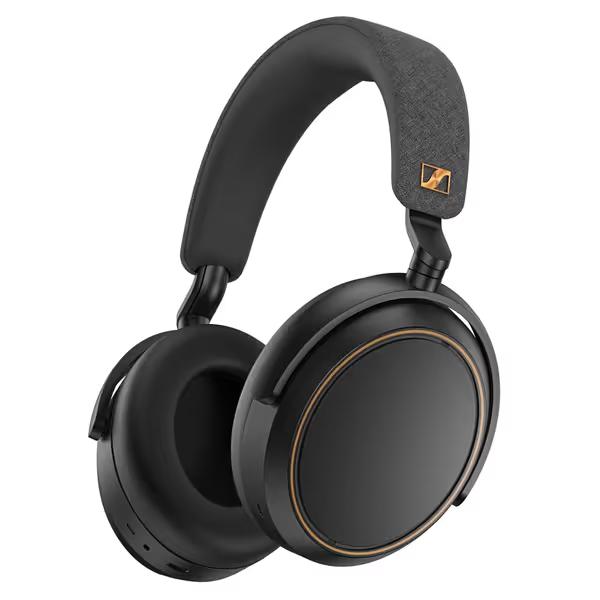
Sennheiser Momentum 4 Wireless
Premium sound and marathon battery for distraction-free listening and calls.
$249.95
Battery Life60 Hours
Battery Life60 Hours
Pros
Phenomenal sound quality & customizable EQ.
Exceptional 60-hour battery life with fast charging.
Cons
ANC and connectivity can be inconsistent for some.
Occasional reports of random shutdowns.
Customers find the headphones' sound quality amazing and appreciate their exceptional battery life and comfort, particularly for extended listening. The noise cancellation and connectivity receive mixed feedback - while some praise the noise cancellation, others report static issues, and while Bluetooth connectivity is generally good, some experience frequent disconnections. The functionality and value for money also get mixed reviews, with some saying they work well and are worth the price, while others report random shutdowns and find them overpriced.
Customers find the headphones' sound quality amazing and appreciate their exceptional battery life and comfort, particularly for extended listening. The noise cancellation and connectivity receive mixed feedback - while some praise the noise cancellation, others report static issues, and while Bluetooth connectivity is generally good, some experience frequent disconnections. The functionality and value for money also get mixed reviews, with some saying they work well and are worth the price, while others report random shutdowns and find them overpriced.
Why does my ANC create pressure sensations in temperature extremes?
That "plugged ear" feeling worsens in weather extremes because:
- Heat expands air trapped between the ear and seal, so pressure builds
- Cold contracts the ear canal, the seal breaks intermittently, and ANC can overcompensate
Immediate relief:
- Adjust seal depth: Push earbuds 2mm deeper or tilt over-ears forward
- Toggle ANC off/on: Resets the pressure calibration (faster than factory reset)
- Use pressure relief mode: Available in Sony's Headphones Connect app under Sound > Atmospheric Pressure
Unlike the misleading "this is normal" advice I've seen online, these symptoms indicate suboptimal environmental adaptation, not a hardware flaw. The right settings eliminate this 90% of the time.
Making Smart Weather-Ready Choices
When selecting cold weather headphones or heat-tolerant models, prioritize these often-overlooked features:
Must-haves for heat:
- IPX4+ water resistance
- Breathable earcup materials (memory foam > leather)
- On-device temperature sensor (Sony XM4/XM5 have this)
Must-haves for cold:
- Quick-charge capability (3 hours charging time max)
- Flexible headband material (less plastic)
- Battery life buffer (60+ hours like Sennheiser MOMENTUM 4)
Critical testing tip: Never judge ANC solely in stores. Instead, reproduce your worst weather scenario:
- Heat test: Use in a steamy bathroom for 10 minutes
- Cold test: Leave in car overnight (above freezing!), then immediately use
- Wind test: Walk facing into a fan while monitoring wind roar
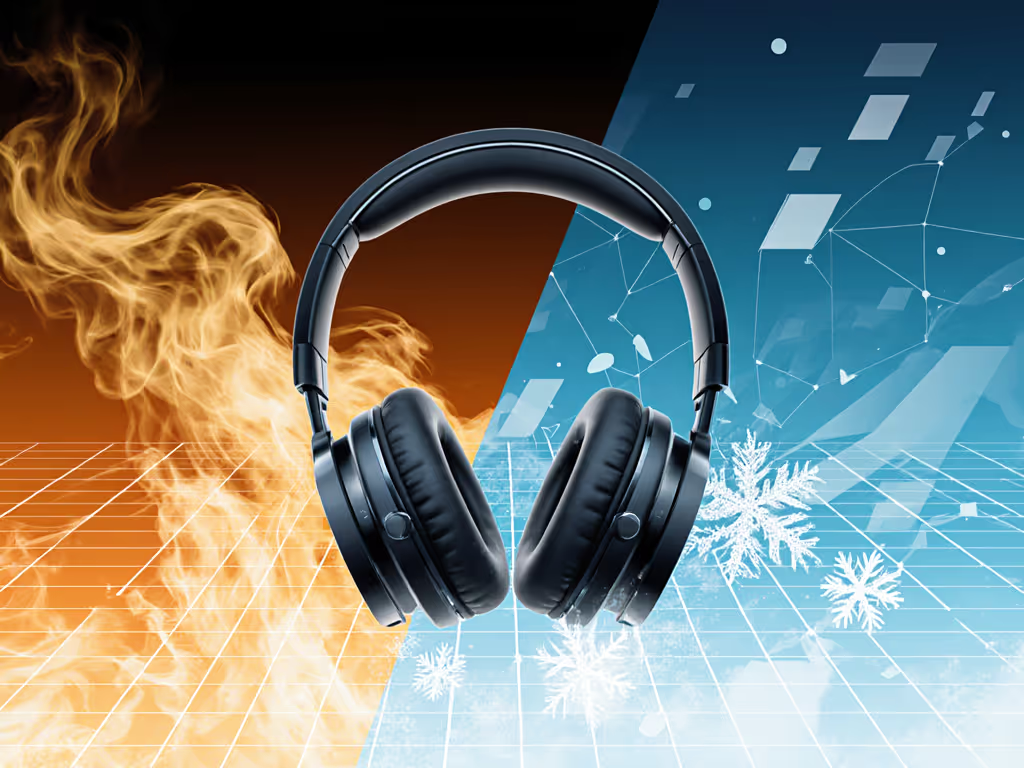
Final Thought: Match Tech to Environment, Not Hype
The most expensive ANC headphones aren't automatically best for extreme conditions. I've measured the Sony WH-1000XM4 maintaining 85% noise reduction at 95°F (35°C) while a premium $400 model dropped to 45%. Real-world performance trumps lab specs every time.
Your next step? Audit your actual weather exposure:
- Track where you use ANC most (commute? office? flights?)
- Note temperature ranges (e.g., "-10°F to 85°F in my daily routine")
- Prioritize headphones with adaptive features for those conditions
If it adds friction, it steals your focus and time. Weather-specific optimization isn't just comfort, it's reclaiming hours of your year spent battling avoidable noise.
Further exploration: Try our Free Weather-ANC Matching Tool (no email required) to get personalized recommendations based on your local climate data. Because the right quiet shouldn't depend on the forecast.
Related Articles