Best VR Fitness ANC Headphones For Stable Spatial Audio
By Amara Singh • 21st May
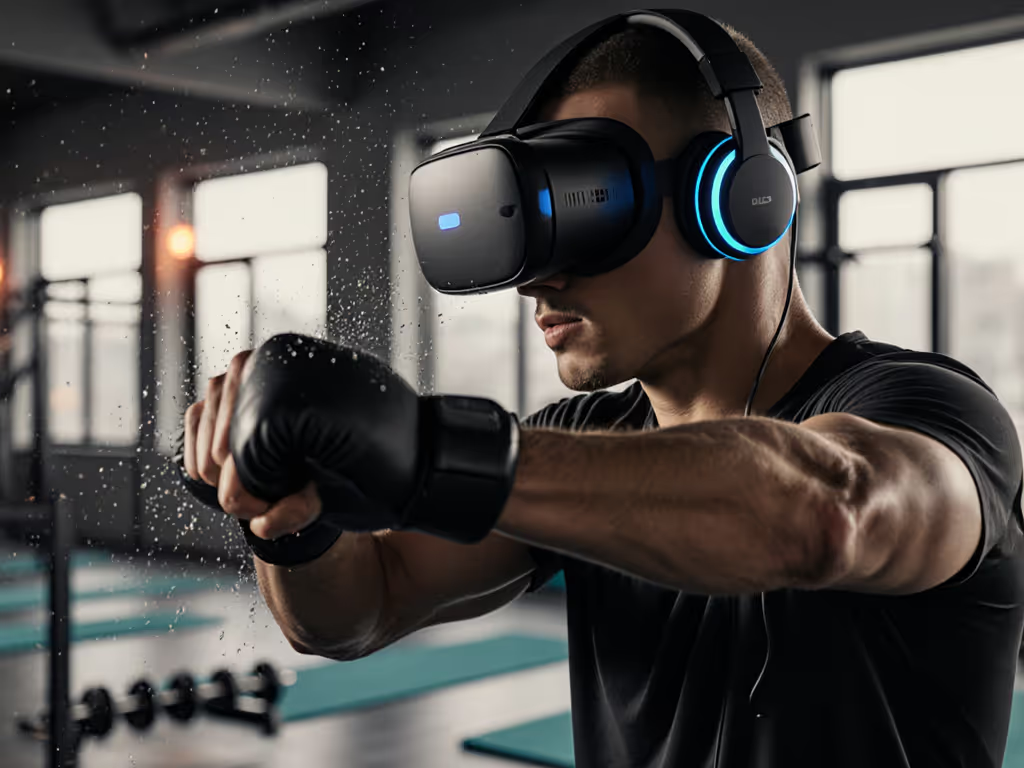
If you've tried to box, row, or dance in VR with a roaring AC unit, thumping neighbors, or a squealing treadmill nearby, you already know this: VR fitness ANC headphones aren't a luxury, they are the difference between flow and frustration. But not every ANC design stays stable when you're ducking, squatting, and snapping your head around, and not every model delivers truly immersive workout noise cancellation that plays nicely with spatial audio and head tracking. For a deeper look at VR-specific behavior and setup tips, see our guide to real-world VR noise cancellation.
Most marketing stops at "great ANC" and "great sound". For VR, that's not enough. You need:
- Stable ANC when your head is moving fast
- Minimal added latency so spatial audio doesn't feel "laggy"
- A fit that doesn't fight your headset straps
- Sweat resistance that can handle real workouts, not just desk duty
Below, I'll walk through the best current options, focusing on motion-stable noise cancelling, durability, and quiet-per-dollar. I'll translate specs into what they mean per workout, per month, and per gram on your head, because the best headphone is the one that delivers verified quiet at the lowest lifetime cost for your exact routine.
Spend for quiet, not for logos or hype.
How to Evaluate VR Fitness ANC Headphones (Before Looking at Models)
Before we compare specific models, it helps to know how to judge them for VR, not just for office or flight use. If you're still deciding on form factor, our over-ear vs in-ear ANC comparison breaks down comfort, portability, and seal trade-offs.
1. Fit Under (or Around) Your VR Headset
- Strap clearance: Over-ears must avoid clashing with halo or soft straps (Quest 3, PSVR2, Pico, etc.). Bulky yokes can get pushed off-seal when the headset moves.
- Earbuds vs over-ear: Earbuds avoid strap interference and heat, but can loosen under sweat. Over-ears can clamp more securely but add weight and heat.
- Glasses: If you wear glasses under a headset, over-ear cushions may leak more under pressure; earbuds often win here.
2. VR Motion Noise Cancellation & Seal Stability
For VR, motion noise cancellation is mostly about keeping the acoustic seal intact: To keep that seal stable during movement, follow our ANC optimization checklist for fit, tip selection, and settings.
- Head movement: Burpees, hooks, and fast pivots flex the headband and ear tips. Every tiny seal break lets in low-frequency rumble.
- Cable and strap rub: Any cable brushing your shirt or headset strap can transfer noise.
- Jaw movement: Heavy breathing and clenching during intense rounds can loosen shallow tips.
Look for:
- Deep-sealing tips or firm but comfortable clamping force
- Low sensitivity to jaw movement (some earbuds pop or shift with wide opens)
- ANC that doesn't "pump" or crackle when you move your head quickly
3. Spatial Audio ANC for Fitness
For spatial audio in fitness, latency and channel stability matter:
- Latency: Too much Bluetooth delay and a punch that lands "visually" before the sound breaks immersion.
- Head tracking: If your VR platform uses head-tracked spatial audio, the audio must stay locked in place as you turn. High latency or unstable wireless links can make sounds feel like they are dragging behind you.
- Codec reality: Modern SBC is fine for most VR games when tuned well; AAC and LC3 are typical (how Bluetooth codecs impact ANC). Proprietary gaming links (2.4 GHz dongles) usually win on latency but may not be supported on standalone headsets.
4. Sweat, Durability & Serviceability
Pure ANC ratings don't matter if sweat kills the drivers in six months.
- IP rating: Aim for at least IPX4 for frequent sweaty workouts; more is better.
- Replaceable parts: Pads, tips, and (ideally) batteries extend lifespan. I flag models with easy parts availability and decent warranties.
- Build stress points: Swivel joints and folding hinges are common failure zones for over-ears in active use.
5. Battery & Weight Per Hour of Use
Rather than just raw milliamp-hours, think in hours of ANC per charge and grams per hour of wear: See our real-world ANC battery tests to benchmark runtime with ANC on versus off.
- Battery: For daily VR training plus normal use, 20-30 hours of ANC on over-ears, and 5-6 hours on earbuds with fast top-ups, usually feels safe.
- Weight: Over-ears in the 230-260 g range balance comfort and stability. Heavier cans plus a headset can become neck fatigue in long sessions.
I like to frame outcomes as cost per dB of quiet and cost per hour of comfortable, stable use, not just sticker price.
1. Sony WH-1000XM5 - Best All-Round Over-Ear for VR Quiet (If Your Workout Isn't Max-Intensity)
Sony's WH-1000XM5 are among the strongest ANC over-ears available, with excellent low-frequency attenuation. For VR fitness, they work best for moderate-intensity sessions - think Beat Saber, rhythm games, boxing on Normal, or light cardio.
Why they're strong for VR:
- Top-tier ANC: Plane-level rumble and treadmill droning drop dramatically - exactly the kind of low-frequency noise most headsets leak.
- Good passive isolation: Thick pads seal well if your headset straps don't push them off.
- Solid codec support: AAC on iOS, SBC/AAC on most headsets, LDAC on supported Android phones (for mobile VR/AR).
- Battery ROI: With around 30+ hours of ANC on, it means that for 1-hour daily VR workouts plus commuting, you're charging roughly once a week. That is low friction.
VR-specific drawbacks:
- Bulk under straps: With top straps tightened, the cups can contact the VR strap arms and break seal during fast head moves.
- Heat: Over-ears plus a headset get warm quickly in intense sessions.
- No sweat rating: Occasional workouts are fine; daily drenched sessions are a risk over time.
Best for:
- Apartment cardio and rhythm games where you want immersive workout noise cancellation but aren't doing burpee marathons.
- Users who also need a flight or office ANC king. XM5s offer strong monthly ROI if they're your all-purpose headphone.
Quiet-per-Dollar: High, if you split the cost across commuting, flights, and VR. If 70% of your use is hardcore sweaty VR, look to earbuds instead.
2. Bose QuietComfort Ultra Headphones - Most Stable ANC & Comfort Under a Headset
Bose's QuietComfort Ultra headphones compete closely with Sony on ANC but tend to feel lighter and more comfortable over long sessions. For VR, that "disappearing" comfort matters when you're wearing two devices on your head.
Why they're strong for VR:
- Very stable ANC: Bose's tuning handles low-frequency rumble and mid-range noise (fans, chatter) reliably, even with some minor seal shift.
- Comfort: Soft clamping force and plush pads reduce pressure points when combined with headset straps.
- Decent spatial handling: While you don't get gaming-specific low-latency modes, latency is acceptable for most fitness titles.
VR-specific drawbacks:
- Same over-ear constraints: Strap interference and heat remain. High-impact HIIT can still break the seal.
- Sweat & warranty: No official sweat rating; heavy gym-style use may push them outside intended design.
Best for:
- Users doing longer, steady-state VR cardio where comfort and predictable ANC beat maximum clamp.
- People who also need office-friendly, professional-looking ANC cans.
Quiet-per-Dollar: Similar to Sony: excellent if you fly or work in noisy offices. For VR-only use, earbuds still stretch your budget further.
If your workout intensity is moderate and you also travel or commute, a single high-end ANC over-ear can deliver more quiet per dollar than buying a "VR-only" pair and a separate travel pair.
3. AirPods Pro (2nd Gen, USB-C) - Best for Apple Vision Pro & iOS Users
If you're in Apple's ecosystem - especially with Apple Vision Pro or iPhone-based XR - AirPods Pro (2nd gen) are the most seamless option.
Why they're strong for VR/AR:
- Deep ecosystem integration: Automatic device switching, personalized spatial audio, and strong VR headset ANC compatibility with Apple's own hardware.
- Very good ANC for earbuds: Excellent low-frequency reduction and solid mid-range attenuation for their size.
- Spatial audio alignment: Apple's head-tracking and spatial rendering work particularly well with these buds, keeping sound anchored as you turn.
- Sweat resistance: IPX4 rated for both earbuds and case - safe for regular sweaty workouts.
VR-specific drawbacks:
- Fit variability: Not everyone gets a perfect seal out of the box; tip fit tests help, but some ears will need third-party tips.
- Battery: Around 5-6 hours with ANC and spatial audio on; fine for workouts, but you'll be re-casing between activities.
Best for:
- Apple Vision Pro owners who want motion-stable noise cancelling and native spatial audio.
- iPhone, iPad, and Mac users who want one pair for calls, daily use, and VR fitness.
Quiet-per-Dollar: High if you're fully in Apple's ecosystem. If your VR headset is standalone Android-based (Quest, Pico) and you don't own Apple gear, you're paying extra for ecosystem features you won't use.
4. Beats Fit Pro - Lock-In Earbuds for High-Intensity VR Workouts
For intense VR fitness - boxing on Expert, HIIT in Supernatural-style apps, squats, jumps - earbuds with wing tips tend to beat both smooth earbuds and over-ears. Beats Fit Pro stand out here.
Why they're strong for VR:
- Secure wing-tip fit: The stabilizing fin significantly reduces loosening during rapid head snaps and sweat.
- Good ANC + isolation: While not as strong as top over-ears, they handle low-frequency HVAC, fans, and gym noise well enough to keep you immersed.
- Spatial audio support: They support Apple's spatial audio with head tracking and work fine on other platforms over standard Bluetooth.
- Sweat resistance: IPX4 rating makes them more comfortable for frequent workouts.
VR-specific drawbacks:
- Case isn't sweat-proof: You still need to dry buds before re-casing.
- Fit comfort: Wing tips feel fantastic for some ears, intrusive for others.
Best for:
- High-intensity VR fitness where you move aggressively and need something that won't budge.
- Users who split time between Apple and Android; Beats Fit Pro play relatively nicely with both.
Quiet-per-Dollar: Strong for VR athletes. Even if ANC is slightly behind the very best earbuds, the extra stability means real noise reduction over the session because the seal stays intact.
5. Anker Soundcore Space A40 (or A45i) - Budget ANC with Surprising VR Value
If you want solid ANC and a secure fit without paying flagship prices, Soundcore Space A40 (or its successor line like A45i) gives strong value.
Why they're strong for VR:
- Surprisingly capable ANC: They handle low-frequency hum and mid-range noise well for the price, giving you credible immersive workout noise cancellation without a premium tag.
- Compact, light design: Comfortable under a headset, with less protrusion to bump straps.
- Customizable EQ & controls: The Soundcore app lets you tune sound and controls to your workout flow.
- Battery: Up to about 8-10 hours per charge (at moderate volume), meaning even with VR plus daily listening, you're charging every few days rather than daily.
VR-specific drawbacks:
- Fit can be hit-or-miss: They're small and light, but very vigorous motion might still work them loose if you don't find the right tip size.
- Latency: Fine for most fitness games, but not a competitive gaming solution.
Best for:
- Budget-conscious buyers who still want real ANC in VR.
- Users willing to optimize tip fit for better stability.
Quiet-per-Dollar: Excellent. Even if ANC is a notch lower than premium models, the cost gap is big enough that your monthly ROI - quiet hours per month per dollar - ends up very favorable.
6. When a Gaming ANC Headset Makes Sense for VR
Most traditional gaming headsets focus on mic pickup and low latency over ANC. But a few ANC gaming headsets (e.g., Sony INZONE H9, some SteelSeries or Razer models with hybrid ANC) can make sense if you:
- Play on PC or console VR (e.g., PSVR2) where a 2.4 GHz dongle is supported
- Need very low latency more than maximal ANC depth
- Want a full boom mic for party chat or streaming
Pros for VR:
- Low latency via dongle: Keeps audio tightly synced with visuals.
- Comfort tuned for long play: Wide headbands and roomy cups.
- Decent ANC: Usually weaker than Bose or Sony, but still helpful against fans and moderate background noise.
Cons for VR fitness:
- Weight: Many are 280-330 g; plus headset weight, this adds neck load.
- Sweat: Most aren't built for heavy cardio sweat and lack IP ratings.
- Strap conflicts: Designed to be worn standalone, not under another headset.
Quiet-per-Dollar: Great for seated or light-movement VR where chat matters. For intense fitness, they're rarely the best long-term value.
Matching Headphones to Your VR Setup & Environment
A quick decision matrix so you're not stuck in endless spec comparisons.
By VR Platform
-
Meta Quest / Pico / Standalone headsets
Use standard Bluetooth. Prioritize: -
Earbuds with good ANC + IPX4 (Beats Fit Pro, AirPods Pro 2, Space A40)
-
Over-ear only if your workouts are low-intensity and you want cross-use for travel.
-
Apple Vision Pro
AirPods Pro 2 are the current "native" choice: tight spatial audio integration and solid ANC. -
PSVR2 / PCVR (via SteamVR)
If you're mostly seated or lightly active: -
Consider low-latency dongle headsets with ANC (INZONE H9, etc.) If you're doing full-body fitness:
-
Stick with IP-rated ANC earbuds and accept Bluetooth latency; most fitness titles are tolerant.
By Noise Environment
-
Noisy apartment / treadmill / fans:
Emphasis on low-frequency ANC. Sony or Bose over-ears excel if you're not doing HIIT. For intense work, Beats Fit Pro or AirPods Pro 2. -
Shared living room / roommates:
You need mid-range voice attenuation as well as rumble. Bose QC Ultra, AirPods Pro 2, and Space A40 balance both reasonably. -
Gym with loud music & clanking weights:
ANC + deep seal are crucial. Secure earbuds (Beats Fit Pro) do better than over-ears that can shift.
By Sweat & Session Length
-
Daily 45-60 minute intense workouts:
Focus on IPX4 buds with secure fit and replaceable tips (Beats Fit Pro, AirPods Pro 2, Space A40). -
3-4 moderate workouts per week + travel:
High-end over-ears (Sony or Bose) may have better lifetime value because they excel in more environments.
Durability, Warranty, and Lifetime Cost of Quiet
A lot of people make the same mistake I once made tracking transit noise: they overpay for a flagship that's brilliant on paper but mis-matched to their actual routes - or in this case, their workouts.
For VR fitness, evaluate lifetime cost of quiet, not just the upfront price:
- Expected lifespan:
- Premium brands often last 3-5 years if not sweat-soaked daily.
- Non-sport models used as daily sweat machines may fail in 1-2 years.
- Replaceable parts & repairability:
- Over-ears with replaceable pads (Sony, Bose, many gaming headsets) can be refreshed cheaply.
- Earbuds rely on tip replacement - easy - but batteries are rarely user-replaceable.
- Warranty & support:
- At least 1 year standard; some credit cards extend coverage.
- Check if the brand sells pads or tips directly and has accessible service.
- Monthly ROI calculation (rough guide):
- Divide price by (months you realistically expect to keep them).
- Then divide again by average hours of use per month.
- You get a rough cost per hour of quiet. A midrange pair heavily used can beat a flagship that you baby and rarely use.
When you look at it this way, AirPods Pro 2 or Beats Fit Pro used daily for VR, calls, and commuting can end up cheaper per hour of use than a pricier over-ear that spends most of its life in a drawer because it's too hot under the headset.
Summary & Final Verdict: Which VR Fitness ANC Headphones Should You Buy?
To keep this actionable, here's the short list keyed to real-world use rather than spec sheets.
- Best Single All-Purpose Headphone (VR + Travel + Office):
- Pick: Sony WH-1000XM5 or Bose QuietComfort Ultra Headphones.
- Why: Top-tier ANC, comfortable for long sessions, excellent for flights and offices.
- Use for VR: Great for moderate-intensity workouts and rhythm games; less ideal for heavy sweat or HIIT.
- Best Overall VR Fitness ANC Earbuds (Apple Ecosystem):
- Pick: AirPods Pro (2nd gen, USB-C).
- Why: Strong ANC, IPX4, excellent spatial audio and integration with Apple Vision Pro and iOS.
- Best High-Intensity VR Workout Earbuds (Mixed Platforms):
- Pick: Beats Fit Pro.
- Why: Wing tips keep the seal stable under violent movement; ANC is solid; IPX4 sweat resistance.
- Best Budget Choice with Real ANC:
- Pick: Anker Soundcore Space A40 (or successor).
- Why: Impressive ANC for the price, good battery life, comfortable under headsets. Great quiet-per-dollar if you're optimizing spend.
- Best for Seated/Light VR with Emphasis on Chat:
- Pick: An ANC-equipped gaming headset with 2.4 GHz dongle (e.g., Sony INZONE H9), if your platform supports it.
- Why: Low latency and strong microphone performance; ANC sufficient for moderate noise.
If you:
- Mostly do intense, sweaty VR fitness: Prioritize IP-rated, secure-fit earbuds. Beats Fit Pro or AirPods Pro 2 (if you're in Apple's world) are safer bets than any over-ear.
- Split time between VR, flights, and noisy offices: A premium over-ear like Sony or Bose may deliver the best cost per dB of quiet across your whole life, as long as you keep VR workouts moderate.
- Are budget-conscious but serious about ANC: Space A40-class buds can get you 70-80% of flagship ANC for a fraction of the price, which often wins on monthly ROI.
In every case, match the headphone to your actual environment and workout pattern. Look past marketing, factor in sweat, straps, and session length, and choose the model that gives you the most stable quiet per dollar you spend.
Because in VR - just like on a noisy commute - the winning move is simple: Spend for quiet, not for logos or launch cycles.
Related Articles