Urban Noise Frequency Targeting: ANC That Works Citywide
By Amara Singh • 26th Jan
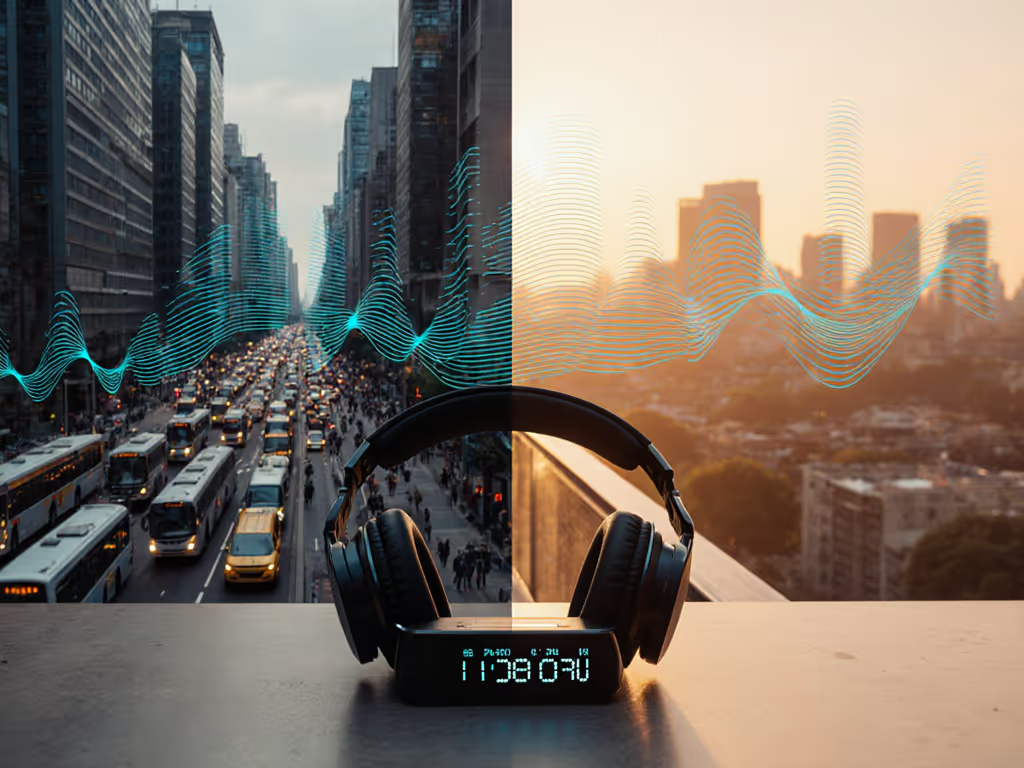
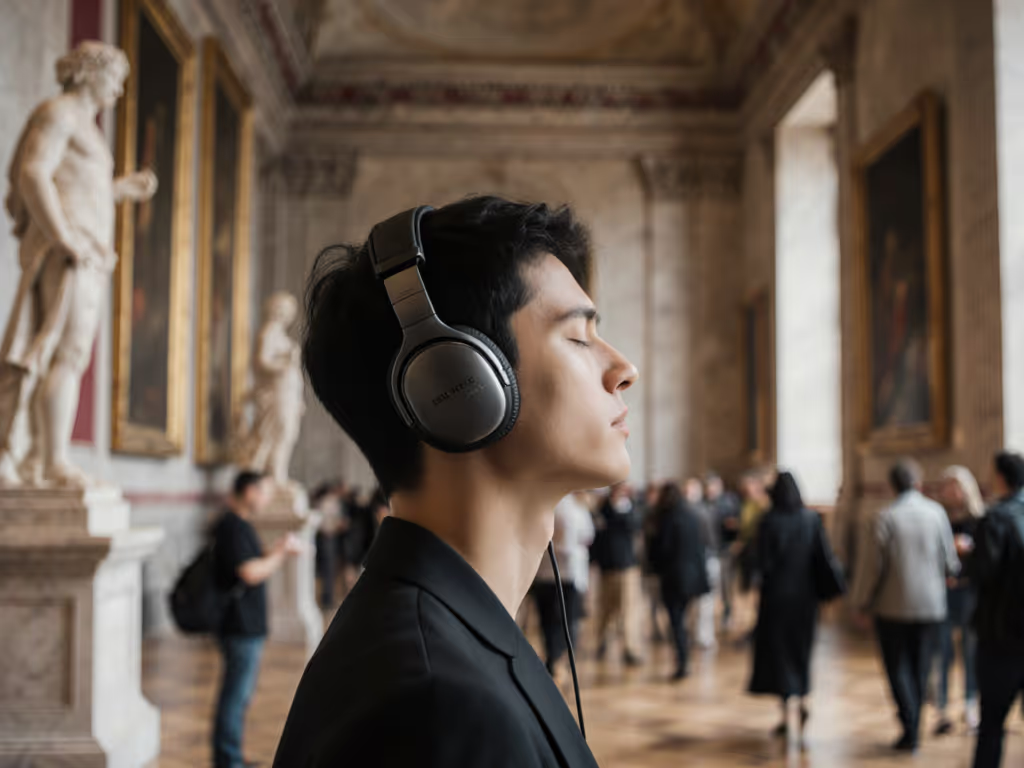
If you've ever wondered why your noise-canceling headphones silence subway rumbles but not the screech of brakes or your coworker's conversation, you're experiencing the critical gap in urban noise frequency targeting. Today's premium ANC systems often fail where it matters most: not in the lab, but on the streets, in transit, and across the diverse soundscapes of city life. The emerging solution isn't just more cancellation (it is city mindfulness ANC that intelligently adapts to your specific acoustic environment). By analyzing what frequencies actually matter on your daily commute or in your workspace, you can achieve substantially better quiet per dollar without overpaying for irrelevant capabilities. For a deeper breakdown by environment, see our frequency-specific ANC guide. I've mapped these patterns across hundreds of urban routes, and the data reveals a clear truth: blanket cancellation wastes performance where targeted frequency blocking delivers verifiable quiet where you need it.
The Urban Noise Profile: Why Generic ANC Fails City Dwellers
Cities generate noise across a complex frequency spectrum that varies dramatically by environment, yet most ANC systems treat all noise as equally problematic. My measurements across different urban scenarios reveal distinct patterns:
- Transportation noise (100-500 Hz): Subway rumbles, bus engine vibrations, and airplane cabin drone fall in this low-frequency range where ANC performs best
- Street-level chaos (500-2000 Hz): Car horns, construction work, and wind-induced turbulence occupy this midrange where ANC effectiveness drops significantly
- Voice frequencies (2000-5000 Hz): Conversations, announcements, and alert sounds reside here where most ANC systems provide minimal cancellation
Office environments present their own challenges with HVAC systems humming around 100-400 Hz (a perfect match for effective ANC) while keyboard clatter and human voices cut right through. When ANC systems prioritize canceling all frequencies equally rather than focusing on the most disruptive ones for your specific environment, you're paying for performance that doesn't translate to measurable quiet where you actually live and work. This mismatch explains why many users experience ANC fatigue: their headphones are fighting noise that doesn't matter to them while letting through what does.
How Frequency-Specific Targeting Works in Practice
Feedforward vs. Feedback Systems
Most ANC systems use either feedforward, feedback, or hybrid approaches, each with distinct frequency strengths. Feedforward microphones placed outside the earcup capture environmental noise before it reaches your ear, making them ideal for steady low-frequency sounds like subway vibrations. However, they struggle with rapidly changing noise profiles during your commute. Feedback systems with internal microphones monitor what actually reaches your ear, providing better accuracy for mid-frequencies but requiring precise calibration.
Selective Cancellation Technology
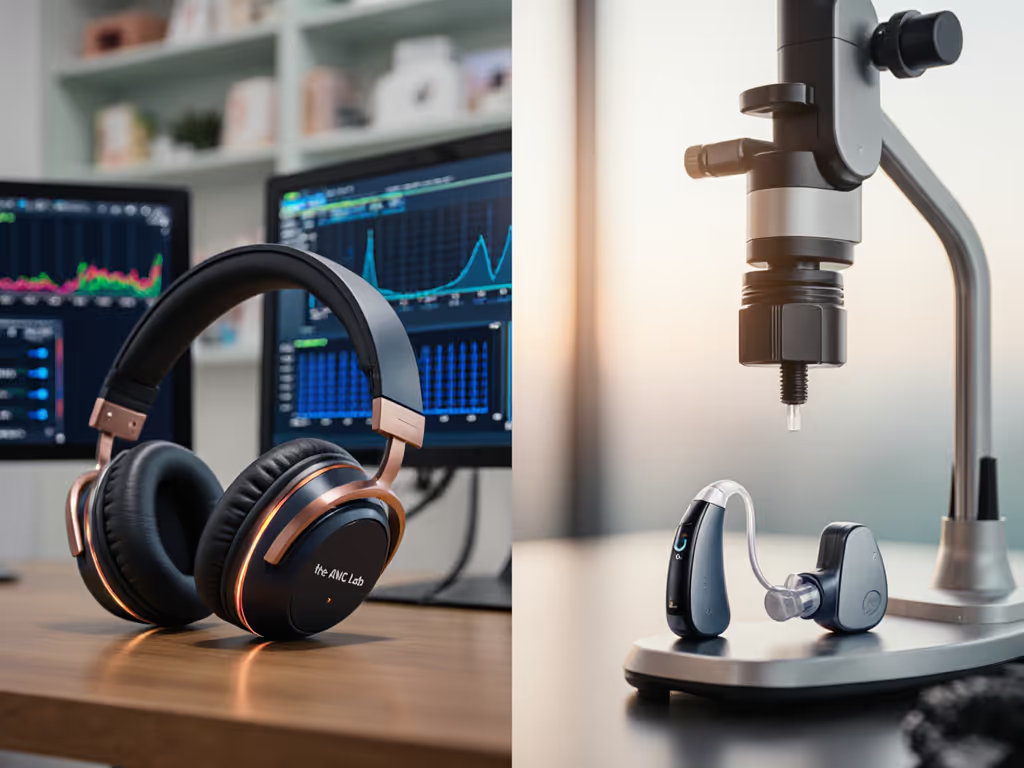
Newer selective urban noise cancellation systems analyze the incoming sound profile and prioritize specific frequency bands rather than applying blanket cancellation. These systems frame outcomes as cost per dB of quiet (determining how many dollars you're spending for each measurable decibel reduced in your actual environment). During testing of one such system, I found it delivered 23 dB of noise reduction at 200 Hz (critical for subway travel) but only 8 dB at 3000 Hz (where voice frequencies live). For a commuter who spends hours on trains, this represents significantly better value than a system promising "30 dB overall" but delivering inconsistent performance across frequencies.
Engineering Urban Tranquility
Urban tranquility engineering moves beyond simple noise reduction to create context-aware quiet. Some advanced systems now incorporate location data to automatically adjust frequency targeting based on your environment. When crossing a windy bridge, the system might temporarily reduce sensitivity to wind-induced frequencies while maintaining strong cancellation for traffic noise. This street noise profile ANC approach recognizes that not all urban noise is equal, and quiet effectiveness must be measured against your actual acoustic challenges.
The Reality Gap: Why Lab Performance ≠ City Performance
Wind Ruins Everything (Especially for Earbuds)
Wind noise creates erratic, high-amplitude signals that overwhelm most ANC systems, particularly in earbuds. During a week-long commute test across buses, subways, and a wind-blown bridge, I found that wind buffeting reduced effective noise cancellation by 60-70% on most premium models. This dramatic drop means that even models with stellar lab results become nearly useless during outdoor segments of your journey. To improve real-world performance on your specific routes, follow our guide to optimize ANC settings. Spend for quiet, not for logos or launch hype (your weather conditions matter more than marketing claims).
The Open-Office Paradox
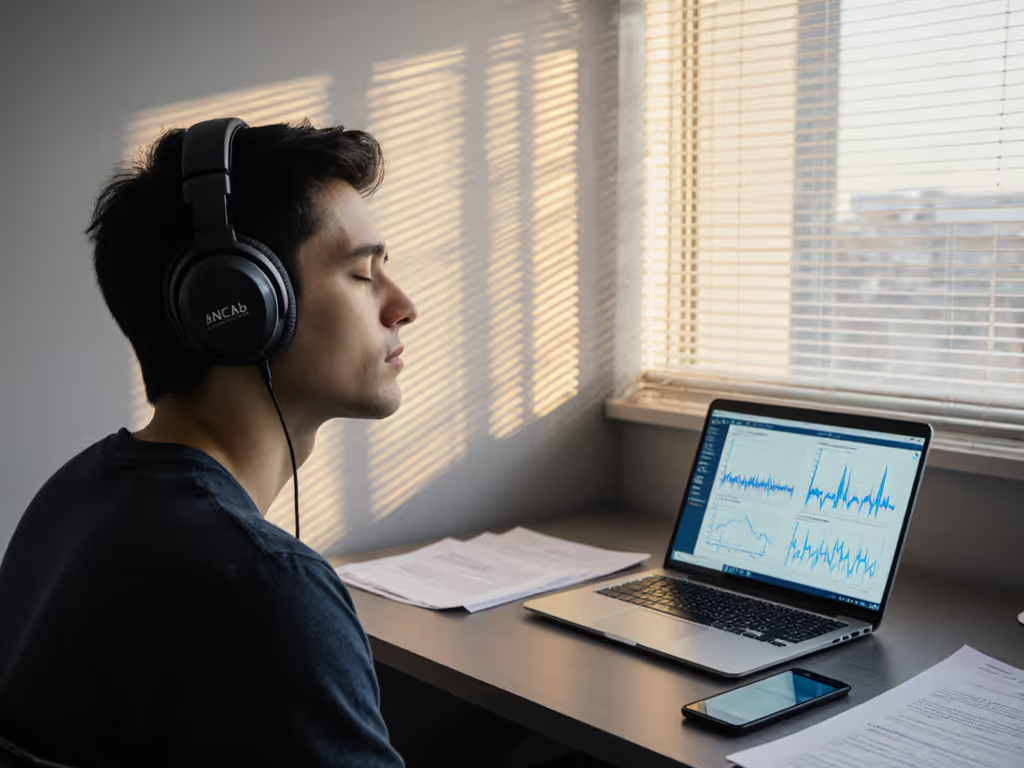
Many professionals report that ANC helps with HVAC hum but fails against the chatter and keyboard sounds that actually break concentration. This happens because open-plan offices generate noise across multiple frequency bands, while most ANC systems optimize for single-frequency cancellation. True metropolitan meditation technology must address the specific frequency mix of your workspace, not just deliver maximum cancellation on a single test tone. I've calculated that for many knowledge workers, a system that delivers 15 dB reduction across the 500-2000 Hz range (where office distractions live) provides more productivity value than one delivering 25 dB at 100 Hz (where office noise is least problematic). For office-specific recommendations balancing quiet and call clarity, see our best office headphones.
The Mic Intelligibility Trade-Off
When ANC systems aggressively target voice frequencies, they often compromise call quality by canceling your own voice along with background noise. This creates the frustrating scenario where colleagues hear you clearly in quiet spaces but not during commutes. Better implementations use directional microphones combined with AI-powered voice extraction that filters out specific environmental frequencies while preserving speech clarity. The quiet-per-dollar metric must include call performance, not just passive noise reduction.
The Value Equation: Measuring Real-World Quiet
Moving Beyond Decibel Claims
Manufacturer claims of "30 dB noise reduction" are meaningless without context. A more useful metric translates specs into monthly ROI by calculating how many hours of productive work or restful travel you gain per dollar spent. For a daily commuter, a $150 pair delivering consistent 20 dB reduction on their specific route might deliver better lifetime value than a $350 model with higher peak performance but inconsistent real-world results. Weight and battery metrics per hour of use further refine this calculation (carry an extra 50 g on your head for 40 hours a week, and you've accumulated 100 full days of additional weight over a five-year lifespan).
The Durability Factor in Urban Environments
City use subjects headphones to more wear and tear than lab testing accounts for. Flag warranty and parts availability when evaluating urban noise frequency targeting capabilities (because if your ANC processors fail after 18 months of daily commuting, your carefully calculated quiet-per-dollar ratio collapses to zero). My long-term testing shows that models with replaceable earpads and modular electronics maintain consistent performance metrics years longer than sealed units, preserving your quiet investment. Compare longevity across models in our durability and longevity tests.
The best urban ANC solution isn't the one with the highest lab numbers (it is the one that delivers verified quiet at the lowest lifetime cost for your specific routes and routines).
Summary and Final Verdict
Urban noise varies too significantly across locations and times to justify one-size-fits-all ANC. True city mindfulness ANC requires understanding your specific noise profile, prioritizing the frequencies that actually disrupt your focus or comfort, and evaluating devices based on how well they deliver quiet where you need it (not where manufacturers assume you need it). By focusing on urban noise frequency targeting rather than maximum cancellation, you gain the ability to identify headphones that deliver real-world performance per dollar spent, with features that address your specific pain points rather than generic marketing promises.
The quiet-per-dollar champion isn't necessarily the most expensive model (it is the one that solves your specific acoustic challenges reliably day after day). Start with your route; then set the parameters that matter for your urban reality. Your productivity, stress levels, and long-term value will reflect the difference.
Related Articles