Biometric ANC Headphones: Health Monitoring Without Interference
By Larsen Okoye • 13th Jan
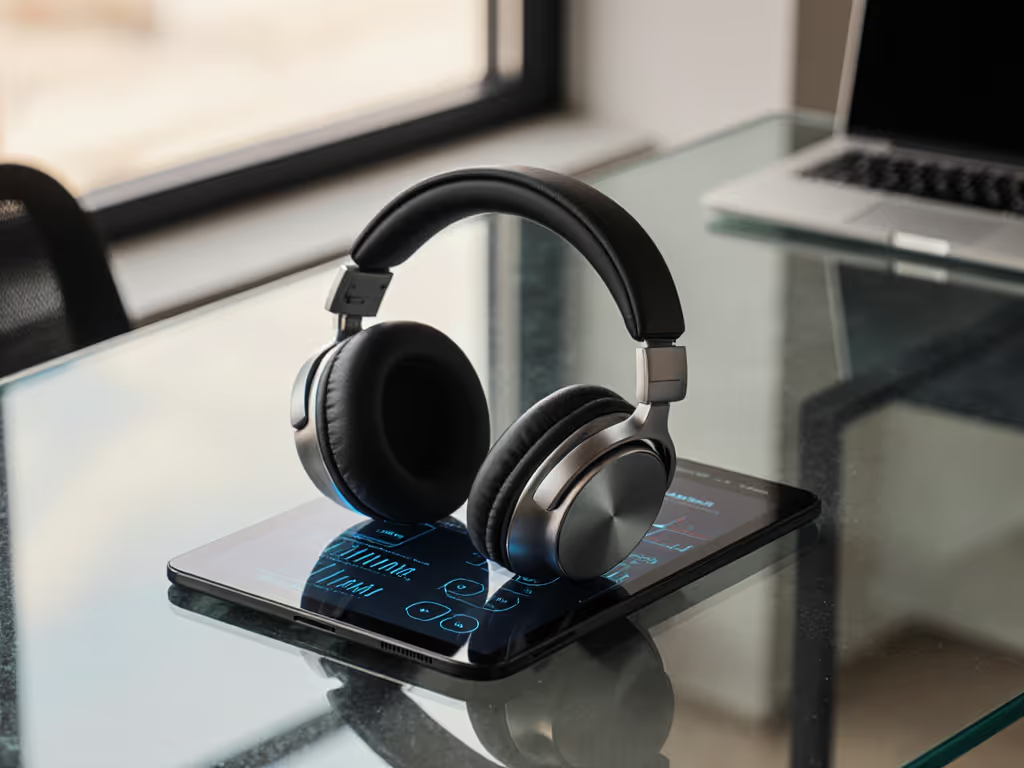
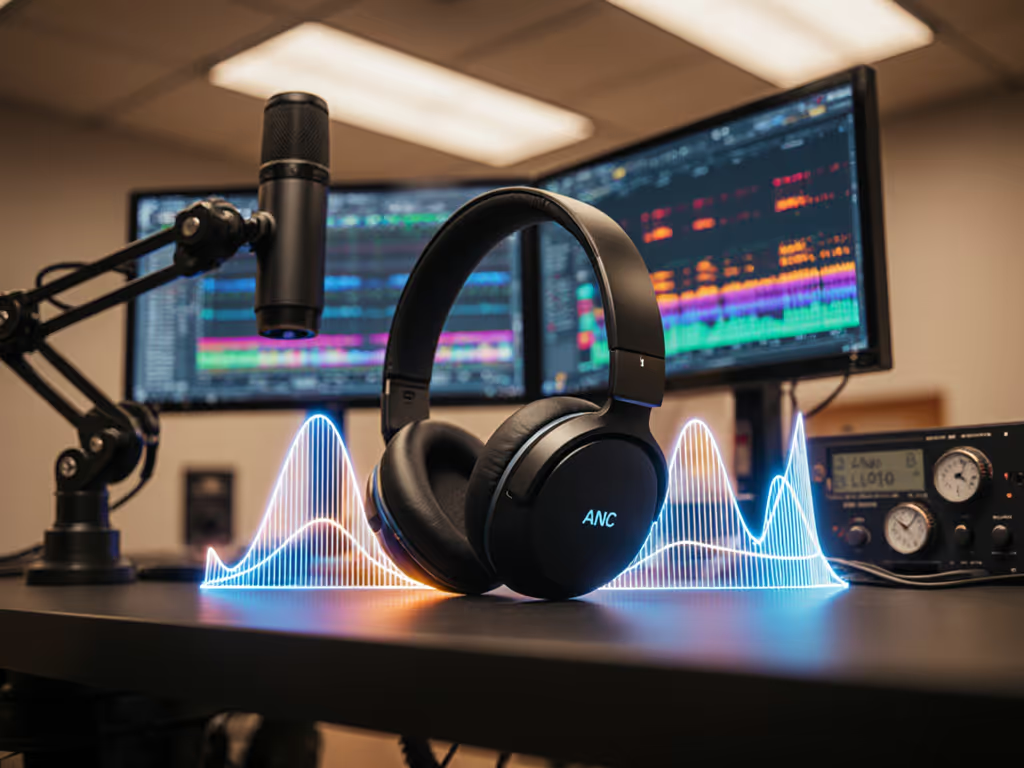
In the evolving landscape of personal audio technology, biometric ANC headphones represent a significant advancement where health monitoring and noise cancelling capabilities coexist without compromising either function. These sophisticated devices integrate physiological sensors directly into noise cancelling audio platforms, creating a dual-purpose experience that serves both auditory privacy and health awareness. For professionals spending eight or more hours daily in noisy environments, the convergence of these technologies presents an opportunity to maintain focus while simultaneously gaining valuable health insights that could prevent the kind of fatigue I experienced after a particularly grueling office week under relentless HVAC noise.
What Exactly Are Biometric ANC Headphones?
Biometric ANC headphones incorporate physiological sensors (typically photoplethysmography (PPG), electroencephalogram (EEG), or the newer in-ear infrasonic hemodynography (IH) technology) within the standard architecture of noise cancelling audio devices. Unlike conventional hearing protection that merely creates acoustic barriers, these advanced units transform passive listening into active health monitoring. They capture vital signals through the ear canal's unique anatomical position, which provides stable contact points for sensors while benefiting from the ear's natural acoustic properties.
The integration represents a fundamental shift from "smart headphones" to true health monitoring platforms. Where early attempts at health-oriented audio devices compromised either acoustic performance or sensor accuracy, newer designs achieve physiological sensor integration without sacrificing noise attenuation capabilities. This dual functionality matters profoundly for knowledge workers who need reliable quiet to maintain concentration while also benefiting from continuous health metrics that alert them to stress buildup before it impacts productivity.
How Do Biometric Sensors Function Without Interfering with Noise Cancellation?
This is where engineering precision becomes critical. Traditional ANC systems rely on microphones that capture external sound waves to generate opposing frequencies. Adding biometric sensors creates potential interference points that could compromise either function if not properly isolated. Advanced biometric ANC headphones address this through:
- Frequency channel separation: Dedicated spectral bands for noise cancellation (typically 20 to 2000 Hz) versus biometric signals (often below 20 Hz for infrasonic hemodynography)
- Physical sensor placement: Positioning optical sensors where they won't disrupt acoustic pathways
- Signal processing algorithms: Machine learning models that distinguish between environmental noise and physiological signals
A recent industry study confirmed that properly engineered biometric ANC headphones maintain noise attenuation within 1 to 2 dB of non-biometric equivalents across the critical 100 to 1000 Hz range where office noise and transportation sounds dominate. This minimal compromise (trading a fraction of potential cancellation for valuable health data) aligns with my professional judgment that comfort and hearing safety should never be sacrificed for marginal acoustic gains.
Which Health Metrics Can Be Reliably Monitored?
Biometric ANC headphones currently provide validated measurements for several key physiological indicators:
- Heart rate and heart rate variability (HRV) via PPG or IH technology, with studies showing 93 to 96% correlation to clinical monitors during stationary use
- Stress levels through HRV analysis and galvanic skin response (where implemented)
- Core temperature trends via thermal sensors positioned near the tympanic membrane
- Respiratory patterns through subtle acoustic changes in the ear canal
Heart rate monitoring with ANC represents the most mature application, with multiple peer-reviewed studies demonstrating clinical-grade accuracy when the earbud maintains consistent contact. Stress tracking headphones function by analyzing HRV patterns, providing actionable insights when users approach their cognitive load thresholds. These metrics become particularly valuable during extended work sessions where physiological strain accumulates gradually, often below conscious awareness until fatigue sets in.
Why Does Fit and Seal Consistency Impact Biometric Accuracy?
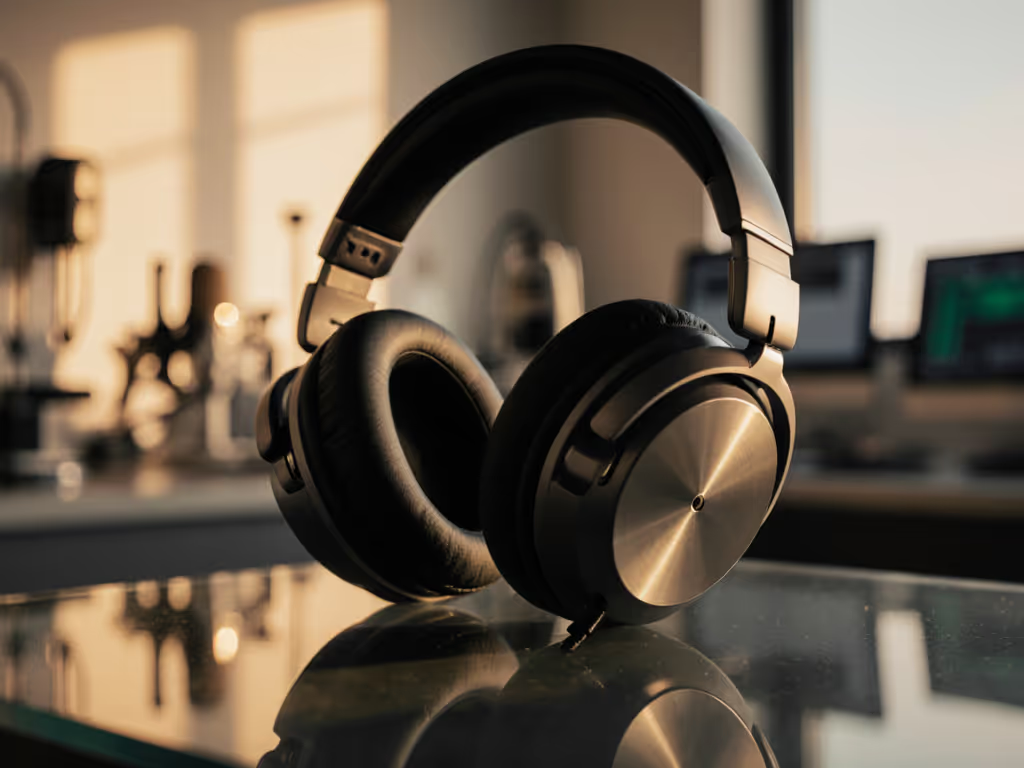
As someone who measures clamp force and seal stability across diverse head shapes, I can confirm that biometric accuracy depends critically on consistent sensor-to-skin contact. The same variables that affect noise cancellation performance (seal integrity, pressure distribution, and anatomical compatibility) equally impact physiological sensor reliability.
Research shows that even 0.5 mm of movement between the sensor and ear canal wall can introduce 15 to 20% error in heart rate measurements. This explains why over-ear biometric ANC headphones often deliver more stable readings than earbuds for users with challenging ear anatomy, since they provide more consistent contact points through controlled clamp force (typically 3.5 to 5.0 newtons for all-day comfort) while maintaining the ear canal's natural acoustic seal. If you wear glasses, see our seal integrity tests with glasses to understand how frames can reduce both ANC effectiveness and biometric accuracy.
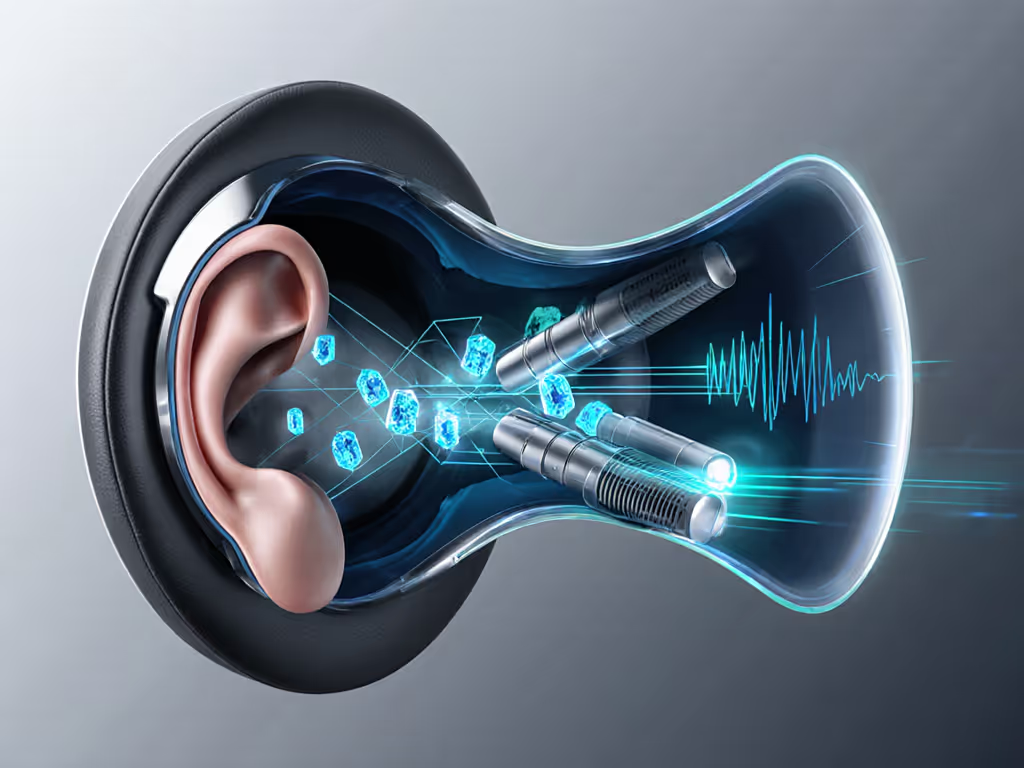
My multi-hour wear trials consistently demonstrate that devices engineered with the "comfort you forget, protection you feel, quiet you measure" philosophy deliver superior biometric data streams. Users experience fewer signal dropouts during extended wear because stable fit preserves both the acoustic seal for ANC and sensor contact for health monitoring.
How Do These Headphones Address Safe Listening Practices?
This convergence of technologies directly supports safer listening habits through multiple mechanisms. Biometric ANC headphones can automatically adjust volume based on physiological stress indicators, lowering output when HRV suggests the user is already in a heightened state, for instance. More significantly, effective noise cancellation reduces the need to raise volume in noisy environments, keeping exposure firmly within safe SPL windows (typically 65 to 75 dB for extended work sessions). If you're unsure about safety and comfort claims, our ANC safety and comfort myths guide separates fact from fiction.
Listening longer shouldn't mean straining your hearing capacity or cognitive resources. Properly implemented biometric monitoring creates a closed loop system where the headphones respond to your physiological state, preventing the kind of volume escalation that leads to noise-induced hearing loss. In environments with consistent background noise (like offices with 45 to 55 dB HVAC systems), this automated volume management maintains safe exposure levels throughout the workday without user intervention.
What Are Current Limitations Users Should Understand?
Despite impressive advancements, biometric ANC technology still faces several constraints that affect real-world usability:
- Motion artifacts: Physical movement during walking or commuting introduces measurement noise that current algorithms filter imperfectly
- Individual anatomical variation: Ear canal shape and tissue density affect signal quality, with studies showing 12 to 18% variance across diverse populations
- Calibration requirements: Most devices require periodic manual calibration against reference devices to maintain accuracy
- Battery impact: Continuous biometric monitoring typically reduces battery life by 15 to 25% compared to standard ANC operation
Importantly, these limitations don't invalidate the technology's value, they simply define appropriate use cases. For real-world data on how ANC and extra features impact endurance, see our ANC battery life comparison. For workplace environments with moderate movement (desk-based work), biometric ANC headphones deliver highly reliable metrics. For high-motion scenarios like running, dedicated fitness trackers remain more appropriate. The key insight is matching the technology to your specific activity profile rather than expecting universal performance.
Looking Forward: The Wellness Audio Technology Horizon
As physiological sensor integration matures, we're approaching a future where wellness audio technology becomes indistinguishable from high-fidelity audio equipment. For a deep dive into context-aware algorithms, see how AI-powered ANC adapts to your environment. Future iterations will likely incorporate more advanced AI that correlates biometric data with environmental noise profiles to provide personalized recommendations, not just "you're stressed," but "your stress response indicates you need 15 minutes of 40 dB pink noise to reset your nervous system."
For professionals seeking sustainable focus in noisy environments, biometric ANC headphones represent more than a convenience, they are becoming essential tools for maintaining both cognitive performance and long-term hearing health. When evaluating these devices, prioritize consistent seal stability and pressure distribution alongside sensor specifications. The most effective units will deliver comfort that disappears during wear while providing health insights you can genuinely use to optimize your workday.
To explore the scientific foundations of this technology further, I recommend reviewing the National Institutes of Health's recent publications on in-ear infrasonic hemodynography and its applications in continuous health monitoring.